
The Workhorse of the Ice Rink
The ice resurfacer is the most important piece of equipment in any ice rink. Running multiple times daily—sometimes 30+ times during tournaments—these machines are the difference between pristine ice and a bumpy, unplayable surface [1]. Yet they face a silent enemy: mineral scale.
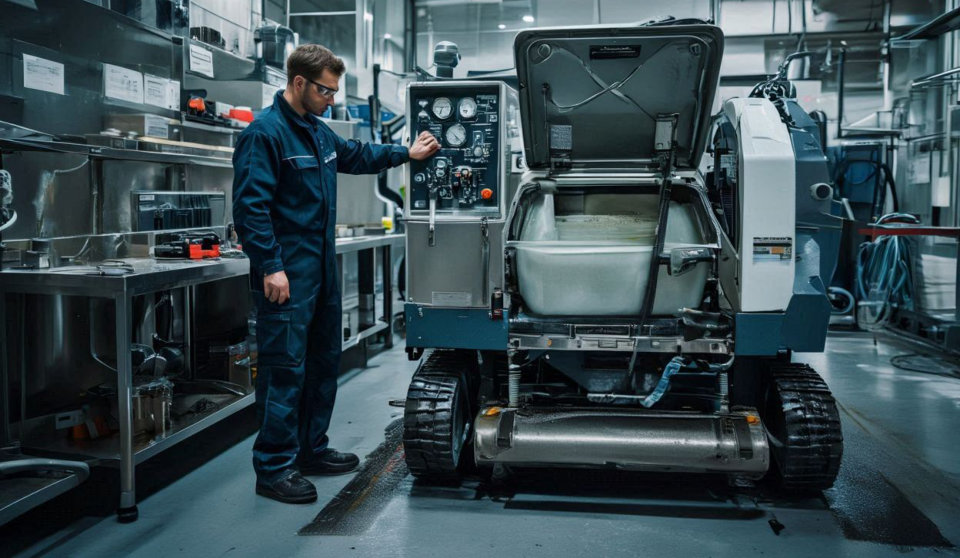
Ice resurfacers are complex machines with multiple systems that depend on water quality. The flooding water system, heat exchangers, boiler (for heated machines), and water tank all interact with water every cycle. When that water carries dissolved minerals, scale accumulates—silently destroying efficiency and shortening equipment life [1].
According to the ICECAT GAS/PRO220 manual, regular maintenance includes oil changes at 100 hours (break-in) and 500 hours thereafter, greasing all joints, and proper storage with the snow tank raised to allow drying [1]. But these maintenance schedules assume clean water. Scale accelerates wear on every component.
The Hidden Drain
Excessive use of flooding water results in flooding, whereas too little flooding water results in dry and uneven streaks [1]. Scale-clogged nozzles make this balance impossible to achieve, ruining ice quality.
Where Scale Attacks Your Ice Resurfacer
Flooding Water System
Scale clogs nozzles and distribution lines, creating uneven water flow. This leads to dry streaks or flooding—both ruining ice quality [1].
Heat Exchangers
In heated resurfacers, scale on heat exchangers reduces efficiency, requiring more energy to maintain water temperature [2].
Water Tank
Scale buildup inside the water tank reduces capacity and can break loose, clogging downstream components. The snow tank must be lifted to dry—scale traps moisture [1].
Valves & Controls
Scale on valve seats prevents proper sealing, causing water leaks and pressure fluctuations. The hand pump valve and brake release lever depend on smooth operation [1].
Pumps
Scale on pump impellers reduces flow and increases motor load. The wheel release valve and hydraulic systems depend on clean fluid—water contamination from scale is destructive.
Temperature Sensors
Scale on sensors causes false readings, leading to incorrect water temperatures and poor ice quality.
The ICECAT manual emphasizes proper maintenance: greasing all joints, protecting from humidity, and storing at proper temperatures [1]. Scale accelerates wear on every moving part—making those maintenance intervals insufficient.

Vulcan installed on ice resurfacer water fill line—protects every internal component
The Flooding Water Challenge
Flooding water finishes the shaved ice surface. You can change the thickness of the ice by adjusting the amount of water and the shaving depth. Excessive use of flooding water results in flooding, whereas too little flooding water results in dry and uneven streaks [1].
This precise balance is impossible when nozzles are clogged with scale. Even partially clogged nozzles create uneven distribution—some areas receive too much water, others too little. The result is ice that requires multiple passes to correct, wasting water, energy, and time.
The Impact of Scale on Flooding
- Uneven water distribution
- Dry streaks requiring recuts
- Flooded areas that freeze slowly
- Wasted water from poor coverage
- Extra passes = more energy use
- Delayed ice availability for users
With Vulcan
- Perfect water distribution every time
- No dry streaks or flooding
- Optimal ice thickness in one pass
- Maximum water efficiency
- Less energy consumption
- Ice ready faster
Critical Distinction: Reactive Cleaning vs. True Prevention
Standard ice resurfacer maintenance includes periodic descaling of water systems. But reactive cleaning has significant drawbacks—and doesn't prevent the daily efficiency losses between cleanings.
- Machine downtime: Resurfacer out of service during cleaning
- Chemical hazards: Acids require PPE, careful handling
- Seal damage: Acids can attack rubber seals and gaskets
- Reactive approach: Only after performance has already degraded
- Never-ending cycle: Scale returns, descaling repeats
- Energy waste between cleanings: You pay the efficiency penalty until scale is removed
After descaling, you must flush thoroughly to remove all acid—wasting water and time [1].
- Zero downtime: Resurfacer always operational
- Zero chemicals: No acids, no PPE, no disposal
- Seal protection: No chemical attack, extended life
- Preventive approach: Scale never forms
- Permanent solution: Install once, protect forever
- Continuous savings: No efficiency loss between cleanings
How It Works:
Vulcan's physical impulse technology alters the crystalline structure of calcium carbonate so it cannot bond to surfaces. Nozzles stay clear, valves seal perfectly, and your resurfacer operates at peak efficiency [6].

The Arena Operator's Math
A single ice resurfacer costs $80,000-$120,000. With 2 resurfacers operating 12 hours daily during hockey season, scale-related efficiency losses and premature failures can cost $10,000+ annually. Vulcan protects your investment.
Real Proof: Banff Fenlands Recreation Centre
Facility: Fenlands Recreation Centre
Location: Banff, Alberta
System: Two hockey arenas [3]
The Solution
Installation of a REALice system—an energy-saving water treatment system for ice rinks that creates a controlled vortex as water flows through it, eliminating the need to use heated water when building or resurfacing ice [3].
The Results
- 44,785 kWh/year electrical energy savings [3]
- 270 GJ/year natural gas energy savings
- 39 tonnes CO₂e/year GHG reductions
- $25,227 rebate/incentive
"This project represents one of the many ways the Town of Banff is working to reduce our overall energy consumption, which is a key strategy in addressing climate change." — Karen Sorensen, Mayor [3]
The Vulcan Connection
Banff achieved significant energy savings through cold water technology. But cold water systems are still vulnerable to scale:
- The vortex system itself can scale, reducing efficiency
- Ice resurfacer water tanks still accumulate mineral deposits
- Nozzles still clog without additional protection
Vulcan + REALice = maximum efficiency

Real Proof: City of Kitchener Cold Water Pilot
Facility: Sportsworld Arena, Kitchener, Ontario
Duration: May 2024 – May 2025 [4]
The Challenge
Water heated up to 60°C is typically used because it gets the air out of the water for a smoother surface, both for making and resurfacing arena ice. Sportsworld Arena had consistently the highest energy intensity per square foot across municipally owned arenas in the region of Waterloo [4].
The Results
"During hockey tournaments ice may need to be resurfaced as many as 30 times in one day—with only one flood using up to 500 L of water." [4]
The Vulcan Advantage
Kitchener achieved savings through cold water deaeration. Now imagine combining that with Vulcan scale prevention:
- Protect ice resurfacers from scale during 30+ daily floods
- Keep nozzles clear for perfect water distribution
- Compound energy savings year after year
Preventive Maintenance Schedules
The ICECAT GAS/PRO220 manual provides these maintenance intervals [1]:
Standard Maintenance
- 100 hours: Break-in oil change
- 500 hours: Regular oil changes thereafter
- After each use: Grease all joints
- Storage: Lift snow tank to dry, protect from humidity, store at 20°C+
With Vulcan
- No scale-related cleaning between intervals
- Water system stays clean—no descaling required
- Valves and seals last longer
- Standard maintenance intervals become sufficient
Winter Storage and Scale Concerns
The ICECAT manual specifies storage conditions: room temperature above 20°C, normal humidity levels. When the ice resurfacer is not in use, switch off the power and close the gas bottles. The snow tank must be lifted up so that the tank can dry and air can circulate freely under it [1].
Scale exacerbates storage problems:
Without Vulcan
- Scale traps moisture against metal surfaces
- Rough scale surfaces prevent complete drying
- Corrosion accelerates under scale deposits
- Spring startup requires descaling before use
With Vulcan
- No scale to trap moisture
- Smooth surfaces dry completely
- No corrosion under deposits
- Spring startup—ready to go
ROI Calculator: 2-Sheet Arena with 2 Resurfacers
| Without Vulcan (Reactive Maintenance) | |
| Ice resurfacer descaling (2x/year @ $1,500 per machine) | $6,000 |
| Nozzle cleaning labor (quarterly, 4 hours @ $50/hr, 2 machines) | $1,600 |
| Water heater descaling (shared system) | $1,200 |
| Energy penalty from scaled heat exchangers (7%) [2] | $2,800 |
| Valve/seal replacements (scale-related) | $1,500 |
| Extra water from inefficient flooding (10% waste) | $900 |
| Total annual scale-related cost | $14,000 |
| With Vulcan (Preventive) | |
| Resurfacer descaling eliminated | $6,000 saved |
| Nozzle cleaning eliminated | $1,600 saved |
| Water heater descaling eliminated | $1,200 saved |
| Energy penalty eliminated | $2,800 saved |
| Valve/seal replacements reduced | $1,200 saved |
| Water waste eliminated | $900 saved |
| Total Annual Savings | $13,700 |
The Ice Quality Value
Poor ice from uneven flooding drives away skaters and hockey teams. Consistent, high-quality ice keeps your facility booked and your reputation strong. Vulcan ensures every flood is perfect.
Get Exact Pricing for Your Arena
For precise pricing tailored to your facility specifications:
- Existing customers: Log in to your account to view model-specific pricing
- New users: Create a free account to access detailed pricing and configuration options
- Need assistance? Contact our team for an ice rink assessment
Account registration takes less than 2 minutes.
Recommended Vulcan Models for Ice Resurfacer Protection
Different arena sizes and resurfacer configurations require different models. Create an account for detailed specifications and pricing.
Vulcan S250
Single resurfacer, shared water fill
Protects flooding water system
Eliminates nozzle cleaning
Preserves water tank
✓ Ideal for smaller arenas
Vulcan S500 / X-PRO 1
2-3 resurfacers, central fill station
Multiple machine protection
Central water treatment
Maximum ice quality
✓ Zero maintenance, zero consumables
Vulcan X-PRO 2
3+ resurfacers, multiple sheets
Full facility protection
All resurfacers protected
Olympic-level ice
✓ Permanent scale prevention
Ice Resurfacer Maintenance Checklist
- Daily: Grease all joints after use [1]
- 100 hours: Break-in oil change [1]
- 500 hours: Regular oil changes thereafter [1]
- Monthly: Inspect water tank for scale buildup
- Quarterly: Check nozzles for clogs, clean if needed
- Storage: Lift snow tank to dry, store at 20°C+ [1]
- Install Vulcan on water fill line: Prevent scale at source
- Eliminate descaling: No more acid treatments
References
- ICECAT GAS/PRO220 Ice Resurfacer User and Maintenance Manual.
- Rinnai UK. (2025). Limescale protection in commercial heating systems.
- Municipal Climate Change Action Centre. (2020). Banff Fenlands REALice Retrofit.
- CityNews Kitchener. (2026). Kitchener cold water pilot project.
- Vulcan Descaler. Electronic Anti-Scale System Technology.
- Vulcan Descaler. Moroccan Hammam Bathhouse Case Study.
- Vulcan Descaler. UC Davis Bodega Marine Laboratory Case Study.
Questions for Your Ice Resurfacer Audit
- How many resurfacers does your facility operate?
- How often do you descale water systems?
- Have you noticed uneven flooding or dry streaks?
- How many labor hours are spent on nozzle cleaning?
- What is your water hardness level?
- Have you ever inspected the water tank for scale?
- What would perfect ice every flood mean for your facility?
Vulcan provides the answers—and the solution.
Protect Your Ice Resurfacer Investment
Join ice rinks nationwide in eliminating scale-driven maintenance—keeping your resurfacers running longer, ice quality higher, and operating costs lower.
About the Author
Waslix (Vulcan Mineral Descaler) provides non-chemical, maintenance-free scale prevention for ice resurfacers worldwide. Our physical impulse technology keeps flooding systems clear, nozzles clog-free, and water tanks pristine—trusted by community arenas and professional facilities globally. Create an account for detailed model specifications and pricing.

