
The Halftime Crush: A Stadium Operator's Nightmare
October 22, 2016. Bryant-Denny Stadium, Tuscaloosa, Alabama. A capacity crowd of 101,821 watched the Crimson Tide take on Texas A&M. Then came the announcement every stadium operator dreads: "Spectators should refrain from using the public restrooms." Water pressure had dropped so low that toilets wouldn't flush [1][2].
101k
Capacity crowd affected [1]
$12M
Water system upgrades [1]
20 min
Halftime window [3]
25%
Fixture usage rate [3]
The problem was clear: during halftime, nearly every restroom fixture in the stadium was used simultaneously. The water system simply couldn't keep up. City and university officials scrambled to resolve the issue by the next home game, but the near-disaster triggered a comprehensive $92,590 water distribution study and ultimately $12 million in infrastructure upgrades—including a 230-foot, 1-million-gallon water tower [1][2].
This wasn't an isolated incident. At Watford FC in the UK, water pressure was "nowhere near strong enough to cope with the demand on match days, to the point where sometimes the water ran out completely" [4]. At the 2025 World Games in Chengdu, engineers faced the same challenge: "taming peak demand" for nearly 300,000 people [5].
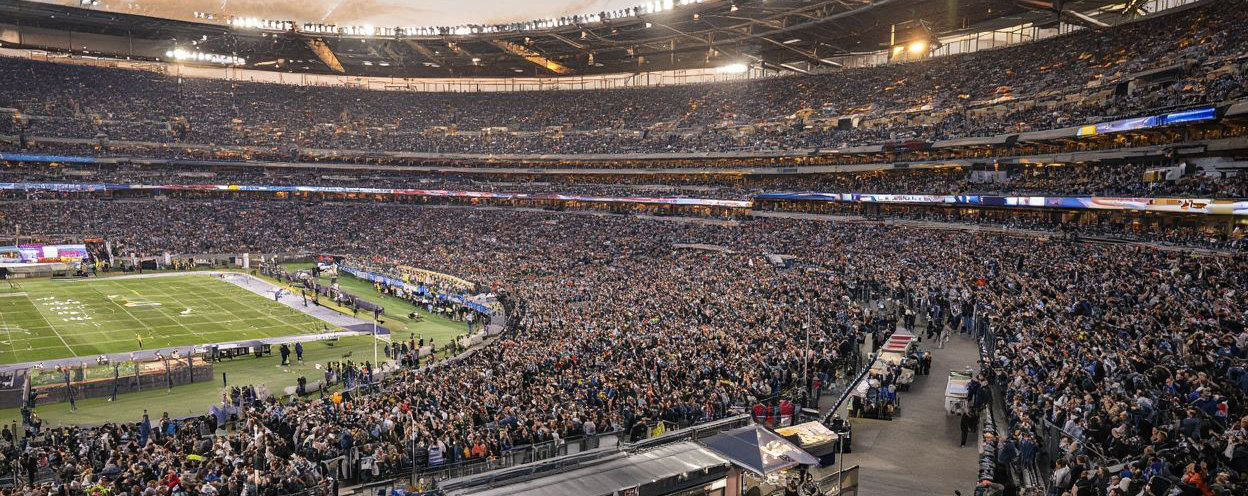
The Scale Connection
While massive infrastructure projects like new water towers solve supply issues, they don't address the hidden problem inside your pipes. Mineral scale narrows pipe diameter, increases friction loss, and reduces flow capacity—making every pressure problem worse. Even a 10% reduction in pipe diameter from scale can increase pressure loss by 40% [6].
The Hydraulic Challenge of Halftime
Plumbing engineers have long struggled to properly size water distribution systems for stadiums and large arenas. The traditional "Hunter's method" doesn't account for the unique demand patterns of sporting events [3].
The Math of Halftime
For a 60,000-seat stadium, halftime calculations assume [3]:
- 25% of attendees will use restrooms during 20-minute halftime
- 15,000 people flushing over 20 minutes
- Two-thirds use urinals (1 gpf), one-third use water closets (1.6 gpf)
- 10,000 urinal flushes + 5,000 toilet flushes
- Equivalent to 500 urinal flushes/minute and 250 toilet flushes/minute
This demand profile completely invalidates traditional pipe sizing methods [3].
The "Big Flush" Myth
Some stadiums test their systems with a "Big Flush"—simultaneously flushing every fixture. But this is a "big joke" among engineers [3].
A stadium with 600 water closets (25 gpm each) and 300 urinals (10-12 gpm each) would demand 18,000 gpm in a Big Flush. Actual peak demand is closer to 3,000-3,300 gpm—about 20% of total fixture capacity [3].
Oversizing by 5x is wasteful and expensive.

Vulcan installed on stadium main water line—preserves pipe diameter and protects booster pumps
Where Scale Attacks Stadium Plumbing Systems
Main Water Lines
Scale buildup reduces effective pipe diameter. Pressure loss in pipes is proportional to the fifth power of diameter change—a 10% diameter reduction increases pressure loss by 40% [6].
Booster Pumps
Scale on impellers and volutes reduces pump efficiency. Variable frequency drives work harder to maintain pressure, wasting energy [5].
Flush Valves
Scale on valve seats prevents proper sealing, causing continuous flow or weak flushes—exactly when peak demand hits.
Water Heaters
Scale on heating elements reduces recovery rate. During peak demand, hot water runs out faster—angering fans [1].
Cooling Towers
Stadium HVAC systems depend on cooling towers. Scale reduces heat rejection, affecting climate control during packed events.
Storage Tanks
Scale reduces effective storage capacity and can break loose, clogging downstream valves and fixtures.
Critical Distinction: Reactive Solutions vs. True Prevention
Most stadiums respond to pressure problems with massive capital projects—new water towers, bigger pipes, additional pumps. But these solutions ignore the hidden thief of capacity: mineral scale.
- New water tower: $6.6M+ [1]
- Storage tanks: $30,000-$50,000 [4]
- Booster pump upgrades: $50,000-$200,000
- Pipe replacement: Disruptive, expensive
- Reactive approach: Only after failure occurs
- Scale still forms: New infrastructure also scales
The University of Alabama spent $12 million upgrading their water system—after the halftime disaster [1].
- Preserves pipe capacity: No diameter loss from scale
- Protects pumps: Maintains design efficiency
- Extends infrastructure life: Protects $multi-million investment
- Preventive approach: Scale never forms
- Permanent solution: Install once, protect forever
- Fraction of cost: Pennies on the dollar vs. major upgrades
How It Works:
Vulcan's physical impulse technology alters the crystalline structure of calcium carbonate so it cannot bond to surfaces. Pipe diameters stay at design specifications, pumps operate at rated efficiency, and your $12 million infrastructure investment is protected [6].

The Stadium Operator's Math
A 10% reduction in pipe diameter from scale increases pressure loss by 40% [6]. That means your $12 million water tower loses capacity—not because it failed, but because scale stole it. Vulcan protects your investment for pennies on the dollar.
Real Proof: University of Alabama / Bryant-Denny Stadium
Facility: Bryant-Denny Stadium
Location: Tuscaloosa, Alabama
Capacity: 101,821 [1]
The Incident
During the October 22, 2016 game against Texas A&M, water pressure dropped so low that an announcement was made over the stadium's public address system that spectators should refrain from using the public restrooms. Officials said the lack of water pressure would keep toilets from flushing for the capacity crowd [1][2].
The Solution
- $92,590 water distribution study [1]
- $12 million infrastructure upgrade
- 230-foot, 1-million-gallon water tower
- Distribution system improvements
The Vulcan Connection
Alabama invested $12 million to ensure water pressure never fails again. But without scale prevention:
- That new 1-million-gallon tower feeds pipes that can lose 40% of their capacity to scale
- New booster pumps lose efficiency as scale coats impellers
- Flush valves fail during the next halftime
Vulcan protects that $12 million investment—ensuring it delivers as designed for decades.

Real Proof: Watford FC, UK
Facility: Watford FC Stadium
Location: United Kingdom
Capacity: 21,000+ [4]
The Challenge
"When playing to a capacity crowd, Watford FC is host to over 21,000 fans. The water pressure was nowhere near strong enough to cope with the demand on match days, to the point where sometimes the water ran out completely. The result was a less-than-satisfactory experience for the fans." [4]
The Solution
The Scale Factor
Watford installed storage tanks and booster pumps to solve their pressure problem. But scale will attack these new assets just like the old ones:
- Scale in tanks reduces effective capacity
- Scale on booster pump impellers reduces efficiency
- Scale in pipes increases friction loss
Vulcan protects this new investment—ensuring the booster set delivers design pressure for decades.
Real Proof: 2025 World Games, Chengdu
Facility: Chengdu Hi-Tech Sports Center
Location: Chengdu, China
Demand: Nearly 300,000 people [5]
The Challenge
The World Games demanded a solution with "zero construction, zero permanent changes, and instant removal post-event." Combined with the intense pressures of peak water demand, 100% reliability was required [5].
The Vulcan Advantage
The LEO pump system used VFDs to maintain pressure—responding in milliseconds to demand changes. But even the best VFD system is compromised by scale:
- Scale-narrowed pipes require higher pressure
- VFDs work harder, wasting energy
- Response time slows as scale builds
Vulcan keeps pipes at design diameter—so your VFDs respond exactly as designed.
Smart Pressure Management Technology
Modern stadiums are turning to intelligent pressure-boosting systems to handle the halftime surge. Key technologies include [7]:
Variable Frequency Drives
VFDs adjust pump speed in real-time to maintain constant pressure regardless of demand. When municipal pressure dips, VFD systems respond in milliseconds [5].
Multi-Pump Systems
Multiple pumps with standby redundancy ensure no single failure disrupts supply. Systems can stage pumps on and off based on demand [7].
Building Automation Integration
Modern pump systems integrate with building management via BACnet or Modbus, allowing remote monitoring and diagnostics [7].
The Vulcan Integration
VFDs, multi-pump systems, and automation all assume clean pipes and pumps at design specifications. Vulcan ensures these assumptions hold true—protecting your investment in smart technology.
Efficiency Case Study: Ford Field
Ford Field, home of the Detroit Lions, completed a comprehensive plumbing pipe upgrade project on the club level of suites. The piping replacement of the cold and hot water supply and returns instantly improved water pressure and quality [8].
Key Results [8]
- 32.3% overall energy efficiency increase
- New water heaters: 96% efficient vs. previous 65%
- Qualified for Smart Buildings Program grant funding
- Avoided potential piping failure during high-use periods
The project created a "safer and less disruptive experience for guests" [8].
The Vulcan Connection
Ford Field achieved 32% efficiency gains through upgrades. Now imagine adding scale prevention:
- Those 96% efficient heaters stay 96% efficient
- New piping never loses diameter to scale
- Pressure stays consistent year after year
ROI Calculator: 60,000-Seat Stadium
| Without Vulcan (Reactive) | |
| Energy penalty from scaled pipes/pumps (7% average) | $21,000 |
| Booster pump maintenance (scale-related) | $8,500 |
| Water heater descaling (10 units) | $6,000 |
| Flush valve repairs (annualized) | $4,500 |
| Water waste from inefficient fixtures | $5,200 |
| Emergency service calls (game-day failures) | $12,000 |
| Total annual scale-related cost | $57,200 |
| With Vulcan (Preventive) | |
| Energy penalty eliminated | $21,000 saved |
| Booster pump maintenance reduced | $8,500 saved |
| Water heater descaling eliminated | $6,000 saved |
| Flush valve repairs reduced | $4,500 saved |
| Water waste eliminated | $5,200 saved |
| Emergency service calls eliminated | $12,000 saved |
| Total Annual Savings | $57,200 |
The Catastrophic Risk
A single halftime failure like the 2016 Alabama incident creates lasting reputational damage. The cost of lost fan goodwill and negative press far exceeds operational savings. Vulcan provides insurance against failure.
Get Exact Pricing for Your Stadium
For precise pricing tailored to your facility specifications:
- Existing customers: Log in to your account to view model-specific pricing
- New users: Create a free account to access detailed pricing and configuration options
- Need assistance? Contact our team for a stadium water system assessment
Account registration takes less than 2 minutes.
Recommended Vulcan Models for Stadium Water Systems
Different stadium sizes and configurations require different models. Create an account for detailed specifications and pricing.
Vulcan S250 / S350
Up to 30,000 seats
Main water line protection
Booster pump protection
Water heater banks
✓ Ideal for smaller venues
Vulcan S500 / X-PRO 1
30,000-80,000 seats
Multiple water zones
Storage tank protection
Cooling tower systems
✓ Zero maintenance, zero consumables
Vulcan X-PRO 2
80,000+ seats / multiple buildings
Full campus protection
As protects $12M Alabama investment
Maximum reliability assurance
✓ Permanent scale prevention
Stadium Water Pressure Management Checklist
- Conduct peak demand analysis: Model halftime flush rates [3]
- Test water hardness: Determine scaling potential
- Inspect main lines: Check for scale buildup (use borescope if possible)
- Evaluate booster pumps: Monitor pressure vs. design specifications
- Review water heater performance: Check recovery rates
- Install Vulcan on main water lines: Prevent scale at source
- Integrate with building automation: Monitor pressure trends [7]
- Document baseline performance: Track improvement over time
References
- Aledo Times Record. (2022). New water tower aims to meet needs of UA campus, football gamedays.
- Darik News. (2022). New water tower near UA aims to meet needs of campus, football game days.
- Plumbing & Mechanical. (2022). Right-sizing plumbing systems for large arenas and stadiums.
- Dura Pump. Watford FC – Better washroom experience.
- LEO PUMP. (2025). World Games 2025 Water Solutions.
- Vulcan Descaler. Electronic Anti-Scale System Technology.
- Wilo. Water distribution and boosting systems.
- Rudolph Libbe Group. (2013). Ford Field Stadium Plumbing Upgrade.
Questions for Your Stadium Water System Audit
- What is our peak halftime demand (gpm)?
- When were our main water lines last inspected for scale?
- Are our booster pumps maintaining design pressure?
- Have we ever experienced pressure drops during events?
- How much have we invested in water infrastructure?
- Is scale silently reducing our pipe capacity?
- Could we prevent the next halftime disaster?
Vulcan provides the answers—and the solution.
Never Run Dry at Halftime
Join leading stadiums in protecting water pressure through scale prevention—safeguarding your $multi-million infrastructure investment and ensuring fan satisfaction.
About the Author
Waslix (Vulcan Mineral Descaler) provides non-chemical, maintenance-free scale prevention for stadium water systems worldwide. Our physical impulse technology keeps pipes at design diameter, protects booster pumps, and ensures reliable flow during peak demand—trusted by major venues and facility operators globally. Create an account for detailed model specifications and pricing.

