
The Hidden Danger in Every Shower
For elderly residents, a hot shower shouldn't be a source of fear. Yet every year, thousands of seniors suffer scald injuries from water that suddenly turns dangerously hot. The culprit is often not a system failure—but a silent saboteur: mineral scale inside mixing valves [1][2].
The American Burn Association reports that scald burns are a leading cause of injury among the elderly. With thinner skin, slower reaction times, and reduced mobility, seniors are at much higher risk for severe burns from hot water [2].
In 2024, an Illinois senior living community was cited for failing to maintain proper water temperatures. The inspection found hot water at 128°F at a resident sink—above the 120°F maximum—creating a scald hazard [3]. Another facility faced immediate jeopardy citation when water temperatures fluctuated wildly, with staff unable to explain why [4].
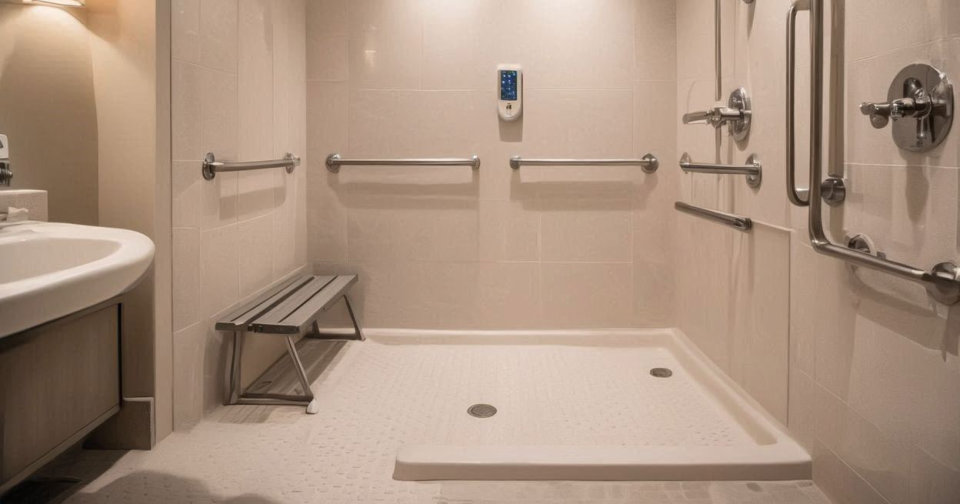
The Human Cost
A scald injury can mean weeks of painful treatment, permanent scarring, loss of independence, and in severe cases, death. For retirement communities, a single incident can lead to lawsuits, regulatory sanctions, and irreparable reputational damage.
How Mixing Valves Work
Thermostatic mixing valves (TMVs) are critical safety devices in senior living facilities. They blend hot water (typically stored at 140°F+ for Legionella control) with cold water to deliver safe temperatures (below 120°F) at the point of use [1][5].
Key Components
- Thermostatic element: Expands/contracts with temperature changes
- Valve seats: Control flow of hot and cold water
- Piston/actuator: Moves based on thermostat position
- Calibration spring: Sets desired outlet temperature
- Check valves: Prevent backflow
How Scale Disrupts Operation
- Scale on valve seats: Prevents tight sealing, causing temperature creep
- Scale on thermostat: Insulates sensor, delays response [5]
- Scale on piston: Restricts movement, prevents proper modulation
- Scale in inlets: Reduces flow, alters mixing ratio
ASSE 1017 and ASSE 1070 are the standards governing thermostatic mixing valves in commercial applications. These standards require valves to maintain outlet temperature within ±3°F under varying inlet conditions [5]. Scale buildup makes this impossible.

Vulcan installed on main hot water line—protects every mixing valve in the facility
Real-World Failure: Illinois Senior Living Community
Facility: Unnamed Senior Living Community
Location: Illinois
Date: September 2024 [3]
The Findings
During a complaint inspection, surveyors found the water temperature in an occupied resident room measured 128°F at the faucet in the bathroom sink. Hot water temperatures in resident care areas must not exceed 120°F to prevent scalding. The facility failed to ensure the resident's bathroom faucet water temperature was within allowable range [3].
The Root Cause
- Failed mixing valve allowing hot water bypass
- Inadequate preventive maintenance program
- No documented testing of water temperatures
- Staff unaware of the hazard [3]
"The facility failed to ensure the resident's bathroom faucet water temperature was within allowable range." [3]
The Scale Connection
While the inspection report didn't specify the cause, scale on mixing valve seats is a primary reason valves fail to regulate temperature properly. Scale prevents tight sealing, allowing hot water to bypass the mixing chamber.

Critical Distinction: Reactive Valve Replacement vs. True Prevention
Most retirement communities address mixing valve failures reactively—waiting until a resident complains or an inspection finds a violation, then replacing the failed valve. But this approach ignores the root cause: scale buildup that kills valves years before their time.
- Emergency replacement: $500-$1,500 per valve [5]
- Plumber overtime: Premium rates for urgent calls
- Resident disruption: Water shut off during repair
- Risk period: Residents exposed to scalding until repair
- Repeat cycle: New valve will also scale
- Regulatory citations: Fines and mandatory corrective plans [3]
A facility with 50 mixing valves spending $1,000 per valve every 5 years = $10,000 annualized cost—plus the risk of injury between failures.
- Zero valve failures: Valves last full design life
- Planned maintenance: Scheduled, not reactive
- Zero disruption: Residents never lose hot water
- Zero scalding risk: Valves function as designed
- Permanent solution: Scale never forms
- Compliance assurance: Pass inspections consistently
How It Works:
Vulcan's physical impulse technology alters the crystalline structure of calcium carbonate so it cannot bond to surfaces. Valve seats stay clean, thermostats remain responsive, and temperatures stay safe [6].

The Facility Manager's Math
A single scald injury lawsuit can cost $500,000+ in settlements, legal fees, and increased insurance premiums. Vulcan provides insurance against scale-related valve failures—for a fraction of the cost of one lawsuit.
Real Proof: CHSLD Long-Term Care Centres, Quebec
Facility: CHSLD Long-Term Care Centres (12 facilities)
Location: Quebec, Canada
Application: Domestic hot water systems
The Challenge
This network of public long-term care facilities faced chronic scale in domestic hot water systems, requiring 8-10 water heater replacements annually across 12 facilities. Inconsistent hot water temperatures posed scalding risks and compromised infection control protocols [7].
The Results
- Zero water heater failures in 2 years post-installation [7]
- Consistent hot water temperatures achieved
- Projected 5-year savings of $150,000+ across facilities
- Reliable thermal disinfection maintained
Relevance to Mixing Valves
The same scale that caused water heater failures in these facilities attacks mixing valves daily. If Vulcan can eliminate scale across 12 long-term care facilities and ensure consistent hot water temperatures, it can protect your mixing valves and residents.
Real Proof: Starcastle Nursing Home, Beijing
Facility: Starcastle Nursing Home
Location: Beijing, China
Application: Central boiler plant
The Challenge
This 300-bed care facility faced soaring energy costs from severe scale in their central boiler plant. They had 2-3mm scale on boiler tubes, gas consumption 18% above design specifications, and annual chemical descaling costs exceeding $8,000 [8].
The Results
- 12% gas savings within 4 months [8]
- Zero chemical costs since installation
- 18-month payback on Vulcan investment
Boiler Protection = Valve Protection
The same technology that saved Starcastle 12% on gas costs also protects mixing valves from scale. If Vulcan can eliminate scale in a 300-bed facility's boiler system, it can keep your mixing valves functioning safely.
Regulatory Landscape for Scalding Prevention
CMS Requirements
Centers for Medicare & Medicaid Services (CMS) require nursing homes to maintain hot water temperatures between 105°F and 120°F at the point of use to prevent scalding [1]. Failure to comply can result in immediate jeopardy citations, fines, and loss of certification.
Tag F919 (formerly F-Tag 468): "The facility must maintain hot water temperatures between 105°F and 120°F at the point of use." [4]
ASSE Standards
- ASSE 1017: Performance requirements for thermostatic mixing valves [5]
- ASSE 1070: Water temperature limiting devices for bathing
- Both require valves to maintain outlet temperature within ±3°F under varying conditions—impossible with scale buildup
The Illinois citation is not isolated. Retirement communities across the country face similar violations when mixing valves fail. In 2025, multiple facilities were cited for water temperatures exceeding 120°F, with surveyors noting "lack of preventive maintenance" as a contributing factor [4].
Why Elderly Residents Are at Higher Risk
Thinner Skin
Elderly skin is up to 30% thinner than younger skin, meaning burns occur faster and penetrate deeper at lower temperatures [2].
Slower Reaction Time
Age-related decline in mobility and reaction time means seniors may not be able to move away from scalding water quickly [2].
Reduced Sensation
Peripheral neuropathy, common in diabetes and aging, reduces the ability to feel dangerously hot water until burns occur.
The Consequence
A scald that might cause minor redness in a young adult can cause third-degree burns requiring skin grafts and hospitalization in an elderly resident. Prevention is not optional—it's a moral and legal obligation.
ROI Calculator: 200-Bed Retirement Community
| Without Vulcan (Reactive Maintenance) | |
| Mixing valve replacements (10/year @ $750 avg) [5] | $7,500 |
| Emergency plumber calls (after-hours premiums) | $3,000 |
| Water temperature testing (quarterly professional) | $2,400 |
| Regulatory fines/citations (annualized) [3] | $5,000 |
| Legal/liability insurance premium (scald risk) | $8,000 |
| Energy waste from scaled system [8] | $4,200 |
| Total annual scale-related cost | $30,100 |
| With Vulcan (Preventive) | |
| Mixing valve replacements reduced (80%) | $6,000 saved |
| Emergency plumber calls eliminated | $3,000 saved |
| Temperature testing simplified (in-house) | $1,500 saved |
| Regulatory fines eliminated | $5,000 saved |
| Insurance premium reduction | $4,000 saved |
| Energy savings | $4,200 saved |
| Total Annual Savings | $23,700 |
The Catastrophic Risk
A single scald injury lawsuit can exceed $500,000 in settlements, legal fees, and increased insurance premiums. Vulcan provides insurance against scale-related valve failures—for pennies on the dollar.
Get Exact Pricing for Your Community
For precise pricing tailored to your facility specifications:
- Existing customers: Log in to your account to view model-specific pricing
- New users: Create a free account to access detailed pricing and configuration options
- Need assistance? Contact our team for a senior living assessment
Account registration takes less than 2 minutes.
Recommended Vulcan Models for Senior Living
Different facility sizes and configurations require different models. Create an account for detailed specifications and pricing.
Vulcan S250 / S350
Single building, 20-40 mixing valves
Protects all mixing valves
Ensures safe temperatures
Prevents scalding risk
✓ Ideal for smaller facilities
Vulcan S500 / X-PRO 1
Multiple buildings, 40-80 mixing valves
Campus-wide protection
Central water system
Comprehensive compliance
✓ Zero maintenance, zero consumables
Vulcan X-PRO 2
Multi-building, 80+ mixing valves
Full campus protection
Multiple boilers and valves
As proven at CHSLD [7]
✓ Permanent scale prevention
Scalding Prevention Checklist
- Monthly: Test water temperature at all resident fixtures [1]
- Monthly: Document all temperature readings in log
- Quarterly: Inspect mixing valves for visible scale
- Annually: Professional calibration of all mixing valves [5]
- Install Vulcan on main hot water line: Prevent scale at source
- Eliminate valve failures: No more emergency replacements
- Train staff: Recognize signs of mixing valve failure
- Review resident incidents: Track any temperature complaints
References
- Centers for Medicare & Medicaid Services. (2025). Nursing Home Requirements.
- American Burn Association. (2024). Scald Injury Prevention Fact Sheet.
- Illinois Department of Public Health. (2024). Senior Living Inspection Report.
- HHS. (2025). Water Parameters in Nursing Homes.
- ASSE International. (2024). ASSE 1017 and 1070 Standards.
- Vulcan Descaler. Electronic Anti-Scale System Technology.
- Vulcan Descaler. CHSLD Long-Term Care Centres Case Study.
- Vulcan Descaler. Starcastle Nursing Home Case Study.
- Vulcan Descaler. Spring Lake Village Case Study.
- Vulcan Descaler. Salvation Army Retirement Home Case Study.
Questions for Your Facility Audit
- When were all mixing valves last tested for temperature accuracy?
- What is our documented temperature at each resident fixture?
- How many mixing valves have we replaced in the past year?
- Have we ever had a resident scald incident or complaint?
- Do we have a preventive maintenance program for mixing valves?
- Is scale visible on any fixtures or valves?
- Could scale be affecting our valves without our knowledge?
Vulcan provides the answers—and the solution.
Safe Water, Safe Residents
Join retirement communities nationwide in preventing scalding through scale-free mixing valves—protecting your residents, your reputation, and your bottom line.
About the Author
Waslix (Vulcan Mineral Descaler) provides non-chemical, maintenance-free scale prevention for retirement communities worldwide. Our physical impulse technology keeps mixing valves scale-free, ensuring consistent safe water temperatures for vulnerable residents. Trusted by facilities like CHSLD, Starcastle, Spring Lake Village, and Salvation Army Retirement Home. Create an account for detailed model specifications and pricing.

