
The Heat Rate Imperative: Why Efficiency Matters
A unit's efficiency, or heat rate, is a function of the plant's design, its size, the type of fuel used and the quality of its operations and maintenance [1]. Even without regulatory considerations, there are good reasons for virtually every coal-fired power plant to improve its heat rate [2].
3-5%
Achievable heat rate improvement [2]
1.5%
Merom Station gain in one year [1]
6-7%
John P. Madgett Station 10-year gain [1]
$1,400/day
Savings from optimized dispatch [1]
The Electric Power Research Institute (EPRI) has looked at dozens of methods for improving heat rates and evaluated their applicability and costs [2]. Performance improvements ranging from 3% to 5% represent an equal percentage of each plant's annual fuel bill—demonstrating that making heat rate an integral part of maintenance and operations activities can yield real and lasting financial savings [2].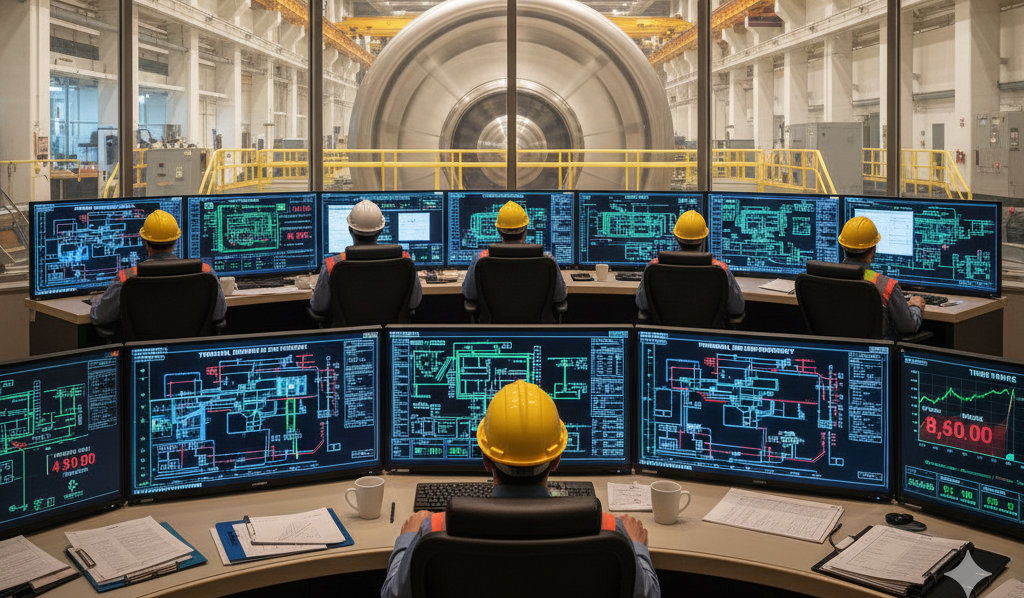
The Scale Connection
According to ASME research, the problem of condenser-tube scale deposits is more likely to become critical where cooling towers are used, because of higher cooling-water temperatures [3]. A 1mm layer of scale increases heat rate by 2-4%—directly eroding fuel efficiency.
EPRI's Plant Performance Assessment Framework
EPRI's Production Cost Optimization (PCO) project assisted participating members in implementing or enhancing heat rate optimization programs to reduce production costs through sustainable performance improvements [2].
1Benchmarking
Benchmark plant thermal performance using historical plant data to establish baseline and identify improvement potential [2].
2On-Site Appraisal
Conduct on-site performance appraisal to identify specific improvement opportunities [2].
3Implementation
Execute recommendations—often achieving significant gains without large capital expenditures [2].
Key Assessment Questions [1]:
- What is the current mechanical condition of the plant's equipment?
- Is heat rate a criterion in making operating decisions?
- What performance monitoring tools and methods are utilized?
- What is the level of heat rate awareness among the plant's staff?
- What is the optimum heat rate (benchmarking) for the particular plant?
Where Scale Impacts Heat Rate: The Critical Systems
Impact: 1-3% heat rate penalty
Condenser pressure should be monitored daily and compared to target to ensure proper condenser performance [2]. Scale deposits on condenser tubes increase backpressure, reducing turbine expansion and overall cycle efficiency.
"The problem of condenser-tube scale deposits is more likely to become critical where cooling towers are used, because of higher cooling-water temperatures." [3]
Impact: 0.5-1.5% heat rate penalty
Heater terminal temperature difference (TTD) and drain cooler approach (DCA) should be monitored on a daily basis along with heater levels to maintain optimal performance [2]. Scale on tube surfaces reduces heat transfer, forcing the cycle to extract more heat from fuel.
Potential improvement from increased monitoring: 30-60 Btu/kWh [2]
Impact: 1-2% heat rate penalty
Scale on boiler tube surfaces acts as insulation, requiring higher firing rates to achieve desired steam temperatures. This directly increases fuel consumption per megawatt-hour.
Impact: 0.5-1% heat rate penalty
Scale on cooling tower fill reduces heat rejection capacity, increasing cold water temperature and condenser pressure [2]. Annual inspection and fill replacement may be required to maintain performance.
Cumulative Impact
A plant with moderate scale in all these systems can experience 3-7% total heat rate degradation—representing millions in annual fuel costs.
Chemical Treatment vs. Vulcan: A Critical Distinction
Many power plants rely on chemical water treatment programs to control scale—but these come with significant operational, environmental, and cost tradeoffs. Understanding the difference is essential for sustainable heat rate improvement.
- Ongoing chemical purchases - Phosphates, polymers, biocides, acids [3]
- Discharge compliance burden - 40 CFR 423.16 limits on chromium, zinc [4]
- Corrosion risk - Chemical treatments can accelerate tube degradation [5]
- Labor-intensive monitoring - Daily testing and adjustment required
- Temporary solution - Chemicals manage scale but don't eliminate root cause
- Environmental liability - Chemical spills, storage, handling risks
Successful results have been described using threshold treatment with stabilized phosphate in combination with sulfur burning [3]—but this requires continuous chemical feed and monitoring.
- Zero chemical purchases - No ongoing consumables
- No discharge compliance issues - Meets 40 CFR 423.16 automatically
- Corrosion prevention - Scale eliminated, so under-deposit corrosion stops
- Zero maintenance - Install and forget; no daily testing
- Permanent solution - Prevents scale formation at the molecular level
- No environmental risk - No storage, handling, or spill concerns
Proven in Power Generation:
The Beihai Thermal Power Plant installed Vulcan X-Pro series on DN600-DN1000 pipes handling up to 29,499 GPM flow to prevent scale from reducing heat exchange efficiency [6].
The Key Insight
Chemical treatments manage scale symptoms but require continuous expense and oversight. Vulcan eliminates the root cause—scale formation itself—with zero ongoing costs, zero chemicals, and zero compliance burden.
Real Proof: Beihai Thermal Power Plant, China
Facility: Beihai Thermal Power Plant
Location: Beihai, China
Application: Heat pump station with plate heat exchangers
The Challenge
Mineral scaling in the heating system of the original heat pump station continuously caused serious heating demand problems. The Beihai Thermal Power Plant had to rebuild the ageing infrastructure of the heat pump station. To prevent future heat exchange efficiency issues, they needed a solution that would protect the facility's operational equipment permanently [6].
The Vulcan Solution
- 3 x Vulcan X-Pro 1 on DN600 (2,600 m³/h / 11,447 GPM) inlet pipe of plate heat exchanger
- 2 x Vulcan X-Pro 1 on DN700 (2,949 m³/h / 12,984 GPM) water inlet pipes of heat pumps
- 1 x Vulcan X-Pro 2 on DN1000 (6,700 m³/h / 29,499 GPM) main water inlet pipe
- External installation—no pipe cutting or system downtime
Installation Details
Impulse bands wrapped around inlet pipes
Client wrapped insulation cotton over bands for protection
X-Pro 2 installed outdoors with weather protection
Protecting critical heat exchange equipment from scale
Expected Outcome:
Prevent scale from reducing heat exchange efficiency—maintaining design heat rate without chemical treatment.
Real Proof: Huaneng Power International
Facility: Huaneng Power International
Location: China
Application: Multiple power generation units
The Challenge
Huaneng Power International, one of China's largest power generators, struggled with persistent scale formation in condenser systems across multiple units. Scale accumulation forced more frequent offline cleaning, increased maintenance costs, and degraded heat rate [7].
The Results
- Condenser cleanliness factor maintained above 95%
- Online cleaning frequency reduced by 60%
- Chemical treatment reduced
- Heat rate improvement of approximately 1.8%
"The Vulcan system has maintained our condenser cleanliness consistently, reducing our need for chemical cleaning and improving overall unit heat rate."
- Plant Operations Manager
Huaneng Power International [7]
EPRI Case Study: Hoosier Energy Merom Station
Facility: 1,000 MW coal-fired Merom Generating Station, Indiana
EPRI Recommendations [1]:
- Heat rate awareness training
- Heat rate improvement task force formation
- Instrument upgrade (feedwater flowmeters, temperature/pressure sensors)
- On-line performance monitoring system installation
Results Achieved [1]:
- 1.5% heat rate improvement in one year
- 5.2% net capacity factor increase
- 2.3% cost reduction
Eight heat rate awareness seminars generated more work requests for heat rate improvements than in the past.
Critical Note: While Merom's improvements came from monitoring and training, scale prevention would have protected those gains by maintaining condenser and feedwater heater performance year-round—without chemical costs.
EPRI Case Study: Dairyland Power Cooperative
Dairyland Power Cooperative implemented Scientech PMAX performance monitoring systems at four coal-fired units [1]:
- Alma Station: 60 MW and 90 MW units
- John P. Madgett Station: 360 MW
- Genoa Station: 360 MW
Results [1]:
- John P. Madgett Station: 6-7% heat rate improvement over 10 years
- Other plants: 4% improvement
Using real-time monitoring systems, Dairyland is now able to determine performance degradation of their units more quickly and optimize plant heat rate.
Key Takeaway
Continuous monitoring enabled early detection of degradation—but prevention of that degradation through scale control would have accelerated these gains.
EPRI Case Study: Santee Cooper
In 1993, Santee Cooper began a program to produce weekly unit heat rate curves from on-line performance monitoring systems at seven coal-fired power plants [1].
Efficiency Gains:
- Three performance engineers → two engineers → one engineer producing seven heat rate curves in two hours
- Weekly heat rate calculation forces plant management to look at unit performance weekly
- $1,400/day savings during typical summer load from optimized dispatch
Prior to the seven units being fitted with heat rate performance monitoring systems, the units were dispatched based on data collected during heat rate tests done in the late 1980s [1].
The Vulcan Advantage
Imagine the additional savings if those seven units also had scale-free condensers and heat exchangers—maintaining peak efficiency year-round without chemical intervention.
Common Heat Rate Improvement Recommendations (EPRI)
EPRI's Production Cost Optimization project identified these common recommendations across five coal-fired units [2]:
- Heat rate awareness training 50-100 Btu/kWh
- Make heat rate info readily available 50-150 Btu/kWh
- Improve controllable losses utilization 75-100 Btu/kWh
- Optimize sootblower operation 70 Btu/kWh
- Initiate routine testing program 75-200 Btu/kWh
- Increase feedwater heater monitoring 30-60 Btu/kWh
- Scale prevention (Vulcan) 100-300+ Btu/kWh
Note: Scale prevention delivers ongoing, permanent savings—unlike training or monitoring programs that require continuous reinforcement.
Condenser Performance Recommendations
EPRI's guidelines for condenser performance include [2]:
- Monitor condenser pressure and compare to target daily to ensure proper condenser performance
- Consider using or installing an online air in-leakage monitor
- For cooling towers: accelerate fill replacement if needed to reduce cold water temperature and condenser pressure
- Perform annual inspection of cooling tower with focus on performance
Chemical Approach
Threshold treatment with stabilized phosphate in combination with sulfur burning [3]
Requires continuous chemical feed, monitoring, and discharge compliance
Vulcan Approach
Physical impulse technology prevents scale formation entirely
Zero chemicals, zero monitoring, zero discharge concerns—maintains design backpressure permanently
Boiler Performance Recommendations
EPRI recommends [2]:
- Utilize plant performance calculations to trend boiler efficiency and individual boiler losses
- Resolve coal distribution problems
- Perform unit diagnostic testing to determine O2, CO, and NOx distribution
- Repair furnace casing leaks
- Repair leaking valves
The Scale Factor
None of these measures can compensate for scale-insulated boiler tubes. Scale on boiler tube surfaces reduces heat transfer directly—requiring higher firing rates regardless of combustion optimization.
Feedwater Heater Performance Recommendations
EPRI's guidelines [2]:
- Monitor heater TTDs and DCAs on a daily basis, along with heater levels
- For heaters with off-design TTDs, verify extraction pressure water legs are properly accounted for
- Repair or replace HP feedwater heater if needed
- Check first-point heater outlet temperature vs. economizer inlet temperature
Vulcan Contribution
Scale-free feedwater heaters maintain design TTDs automatically—eliminating the need for frequent monitoring and chemical treatment.
Instrumentation and Monitoring Recommendations
EPRI emphasizes the importance of accurate instrumentation [2]:
- As transmitters are replaced or upgraded, they should be replaced with high-accuracy, "smart" transmitters
- Plant calibration standards should be set up on a periodic schedule
- Set up and use electronic database for tracking instrument calibrations
- Redundant instruments should provide the same readings
At Merom Station, EPRI recommended upgrading key instruments including feed-water flowmeters and various temperature and pressure sensors because data reliability depended on instrument accuracy [1].
The ROI of Scale Prevention for Heat Rate
| Baseline heat rate: 10,000 Btu/kWh | |
| Annual generation: 3.5 million MWh | |
| Fuel cost: $3.00/MMBtu | |
| Annual fuel cost baseline | $105,000,000 |
| 1% heat rate improvement from scale prevention | $1,050,000 saved |
| 2% heat rate improvement from scale prevention | $2,100,000 saved |
| 3% heat rate improvement from scale prevention | $3,150,000 saved |
Chemical Treatment Costs
Typical chemical treatment programs for a plant this size cost $150,000-$300,000 annually—with no heat rate improvement, only scale management. Vulcan eliminates this cost entirely while delivering actual heat rate gains.
Get Exact Pricing for Your Plant
For precise pricing tailored to your power plant specifications:
- Existing customers: Log in to your account to view model-specific pricing
- New users: Create a free account to access detailed pricing and configuration options
- Need assistance? Contact our team for a power plant assessment
Account registration takes less than 2 minutes.
Recommended Vulcan Models for Power Generation
Different plant sizes and configurations require different models. Create an account for detailed specifications and pricing.
Vulcan S150 / S250
50-200 MW plants
Heat recovery steam generators
Condenser circuits
Cooling tower loops
Vulcan S350 / S500
200-600 MW plants
Main condenser systems
Feedwater heater circuits
Auxiliary cooling systems
Vulcan X-PRO Series
600MW+ / multiple units
As installed at Beihai: DN600-DN1000 pipes [6]
Circulating water systems
Plant-wide scale control
References
- Power Engineering. (1999). Heat-rate Optimization Pays Dividends.
- POWER Magazine. (2014). Coal-Fired Power Plant Heat Rate Improvement Options, Part 2.
- ASME. (1951). Problems Relating to Operation, Maintenance, and Chemical Control of Cooling Towers for Steam-Electric Generating Stations.
- 40 CFR 423.16 – Pretreatment standards for existing sources (PSES).
- OSTI.GOV. (1985). Tests of nonchemical scale control devices in a once-through system.
- Vulcan Descaler. Beihai Thermal Power Plant Heat Pump Station Case Study.
- Vulcan Descaler. Huaneng Power International Case Study.
Questions for Your Heat Rate Improvement Program [1]
- What is the current mechanical condition of the plant's equipment?
- Is heat rate a criterion in making operating decisions?
- What performance monitoring tools and methods are utilized?
- What is the level of heat rate awareness among plant staff?
- What is the optimum heat rate (benchmarking) for this plant?
- Is scale degrading condenser and feedwater heater performance?
- Are we spending millions on chemical treatment that could be eliminated?
With Vulcan, you eliminate scale at its source—protecting your heat rate investment without chemicals.
Improve Your Heat Rate Permanently
Join Beihai, Huaneng, and leading power plants worldwide. Eliminate scale, reduce fuel costs, and stop chemical dependence.
About the Author
Waslix (Vulcan Mineral Descaler) provides non-chemical, maintenance-free scale prevention for power generation worldwide. Our technology helps fossil plants improve heat rate by 1.5-5% while eliminating chemical treatment costs and compliance burdens. As proven at Beihai Thermal Power Plant on pipes up to DN1000, Vulcan delivers permanent scale prevention without ongoing expenses. Create an account for detailed model specifications and pricing.

