
California's 2025 Energy Code & Vulcan
How mineral scale prevention supports California's nation-leading building decarbonization goals, reduces energy costs, and helps meet Title 24 requirements.

California Energy Commission data shows that buildings account for 25% of the state's total greenhouse gas emissions. The 2025 Energy Code update (effective January 1, 2026) is designed to save Californians nearly $5 billion in energy costs over 30 years and reduce GHG emissions equivalent to over half a million homes [1].
25% of State GHG
comes from buildings
2025 Code Now in EffectENERGY EFFICIENCY IS THE "QUIET WORKHORSE"
"Energy efficiency is the quiet workhorse of the clean energy transition. Efficiency reduces Californians' bills, improves their health and comfort, and reduces strain on the electricity grid," said CEC Commissioner Andrew McAllister. "When we build and upgrade homes to use less energy, California families save money, and communities get cleaner air and a more reliable electricity system." [3]
Long-Term System Cost (LSC)
The 2025 code introduces a major conceptual shift from Time Dependent Valuation (TDV) to Long-Term System Cost (LSC)—a new energy metric that factors in lifecycle costs, emissions, and grid impacts [4].
Heat Pump Transition
The 2025 code is expected to catalyze 500,000 heat pump installations within the first three years, cutting around 4 million metric tons of greenhouse gases [5].
What's New for 2025?
For Single-Family Homes:
- Energy use "budgets" encourage heat pumps for space heating, cooling, and water heating.
- Updated HVAC efficiency and controls (smart thermostats with energy pricing data).
- Increased efficiency of exterior walls and windows [6].
For Multifamily Homes:
- Heat pump encouragement for space heating/cooling through energy budgets.
- Electric-ready requirements for water heating and cooking.
- Strengthened ventilation standards and EV charging access [7].
For Commercial Buildings:
- Heat pumps encouraged for space heating/cooling in select new buildings.
- End-of-life rooftop HVACs replaced with high-efficiency systems.
- Electric-ready requirements for commercial kitchens [8].
Local Reach Codes
California Energy Commission:
Building Standards Branch: Energy Code Information
California Energy Commission | 715 P Street | Sacramento, CA 95814
Contact CEC
Single-Family Homes: 2025 Energy Code
By building homes to the 2025 California Energy Code instead of the latest national standards, Californians will save nearly half on their energy bills. Many new U.S. homes aren't even built to the latest national model code, making new California homes some of the most efficient in the country [9].
Key Requirements
- Energy use "budgets" encourage heat pumps for space heating, cooling, and water heating
- Updated HVAC efficiency and controls (smart thermostats with energy pricing data)
- Increased efficiency of exterior walls and windows
The Hidden Risk: Scale on Heat Pump Efficiency
Heat pumps are central to California's decarbonization strategy—but their efficiency depends on clean heat transfer surfaces. 1 mm of scale buildup has been recorded at a 15% increase in energy demands; ⅛ inch thickness on heating elements can result in 20%-25% efficiency loss [10]. For a home designed to meet strict energy budgets, scale can silently push you over compliance limits.



Multifamily Housing: 2025 Energy Code
The 2025 code encourages heat pumps for space heating and cooling through energy "budgets." For low-rise buildings of three or fewer habitable floors, heat pump water heaters are encouraged for units with individual water heaters. New electric-ready requirements make it easier to install clean electric appliances [12].
Key Requirements
- Heat pumps encouraged through energy budgets
- Electric-ready requirements for water heating and cooking
- Strengthened ventilation standards for indoor air quality
- EV charging access through dedicated circuits
- Improved building envelope efficiency (wall and slab edge insulation) [13]
Why Scale Matters for Multifamily Buildings
Multifamily buildings have extensive plumbing networks, centralized water heating, and shared mechanical systems. Scale buildup in these systems leads to:
- Increased water heating costs due to energy loss in hot water circuits [14]
- Bacterial growth in pipes carrying drinking water (biofilm uses scale as food source)
- Rust accumulation leading to corrosion and pipe failure
- High maintenance costs for repairs and equipment replacement


Commercial Buildings: 2025 Energy Code
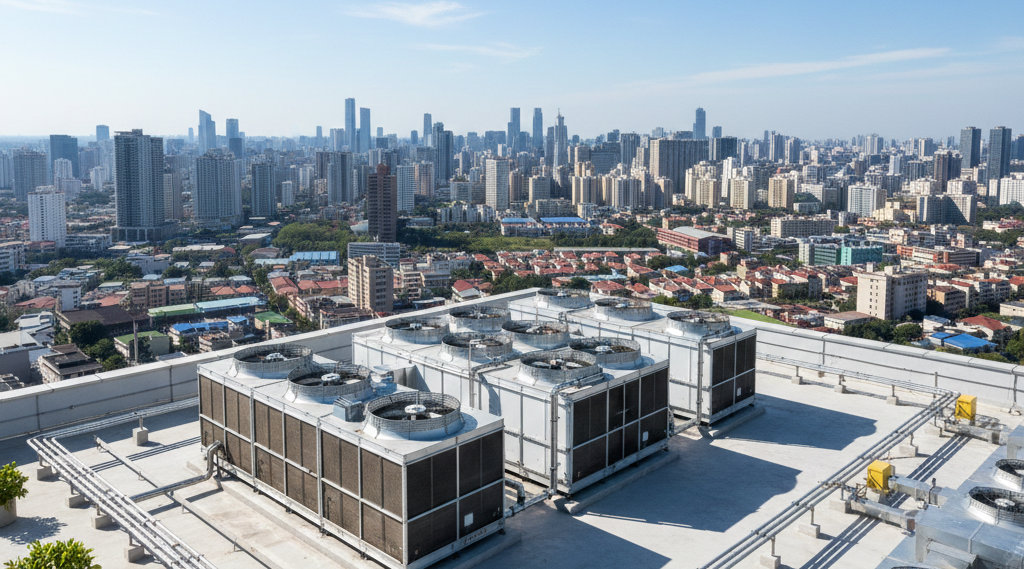
For businesses and nonresidential buildings, the 2025 code encourages heat pumps for space heating and cooling in select new buildings. For alterations, end-of-life rooftop HVAC systems must be replaced with high-efficiency systems (including heat pumps) on stores, schools, offices, and libraries. New electric-ready requirements prepare commercial kitchens for future appliance transitions [15].
Key Requirements
- Heat pumps encouraged for space heating/cooling
- Rooftop HVAC replacements with high-efficiency systems
- Electric-ready requirements for commercial kitchens
- Updated HVAC efficiency and control standards
- Improved building envelope efficiency [16]
Commercial Scale Impact: By the Numbers


More Commercial Success Stories



Bay Area & Beyond: Going Above State Requirements
San Francisco
Requires buildings undergoing major renovations to be all-electric [22].
Oakland
Passed FlexPath and Electric Readiness Reach codes [23].
Menlo Park / Sunnyvale / Mountain View
Adopted AC-to-heat pump (AC2HP) and electric readiness codes [24].
Marin County
Expanded "Flex Path" policy to require energy efficiency or electrification in home remodels over 500 sq ft [25].
The Opportunity: Local reach codes are pushing even faster toward electrification and efficiency. Vulcan's chemical-free scale prevention directly supports these goals by ensuring heat pumps, boilers, and cooling towers operate at peak efficiency—without energy-wasting scale buildup.
Ready to Protect Your Building's Energy Performance?
Join California building owners using Vulcan to meet Title 24 requirements, reduce energy consumption, and extend equipment life.

