
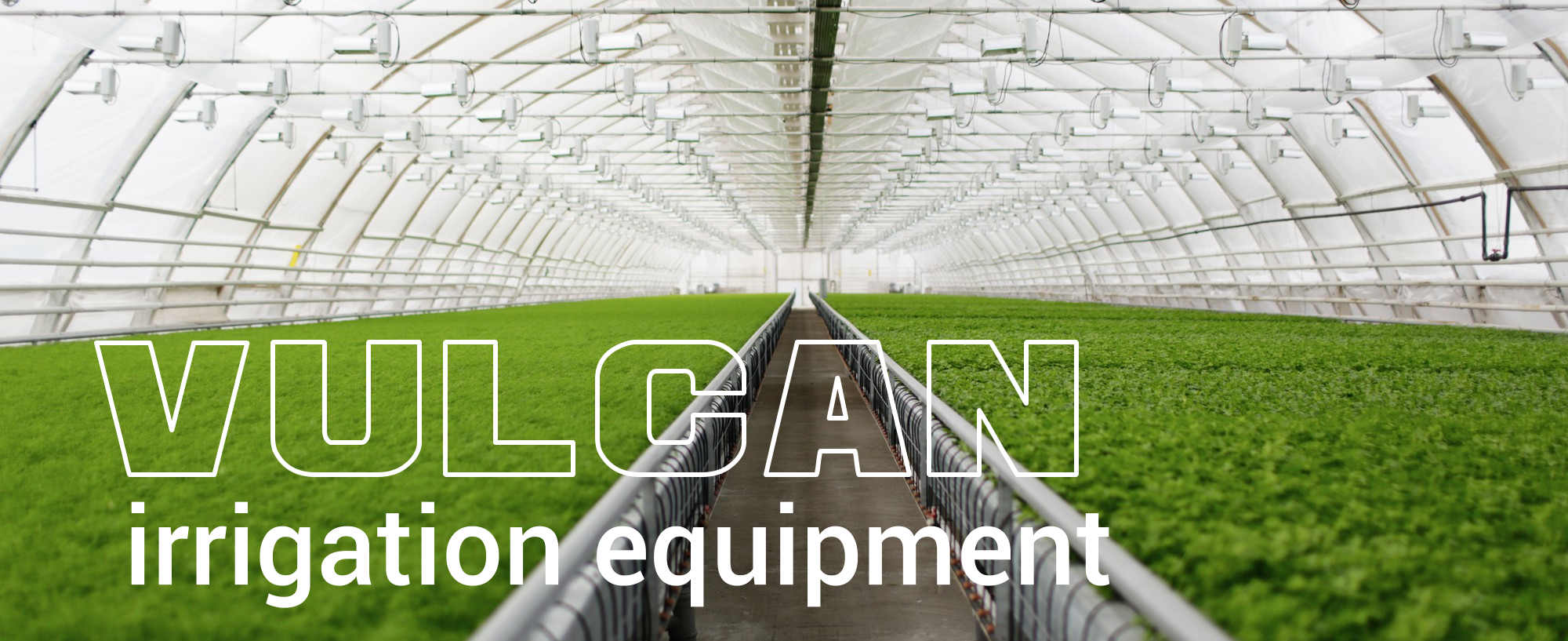
Irrigation Systems.
How does mineral scaling impact irrigation systems?
Water pressure changes and heat exacerbate the precipitation of minerals out of water where they bond to everything—pipes, valves, emitters, and pump components. Irrigation equipment in agricultural settings and greenhouse environments face a constant battle against calcium carbonate (CaCO₃) scaling, which constitutes over 50% of all fouling substances in these systems [1].
56%
Clogging reduction with biological treatment [2]
53%
Scale acceleration from Fe³⁺ ions [1]
85B
Gallons of recycled water threatened by salt [3]
Irrigation equipment in agricultural settings and greenhouse environments tend to rely on classic descaling solutions such as traditional water softening, periodic chemical treatments, or some farmers may opt to incorporate ozone technology for the purpose of increasing dissolved oxygen levels in water. The point of view for using ozone is that it helps to coagulate particles (and hopefully mineral scale along with it) out of a water supply. Ozone is phenomenal at disinfecting water.
All of these 'mineral scale reduction processes' have significant drawbacks ranging from an increase in water consumption (water softeners), manual maintenance (all of these solutions), to environmental considerations (chemical treatments, water softeners), to a high investment cost with regular maintenance and consumable parts (all the systems, and in particular ozone).
Real Research: Molecular-Level Evaluation of Treated Wastewater in Drip Systems
A 2024 study in Chemosphere examined the interactions of dissolved ions and hydraulic shear stresses on calcium carbonate scaling in drip irrigation systems using treated wastewater [1]. The research revealed that:
- Fe³⁺ accelerates scaling by 23.1%–53.3%—it reduces the unit cell volume and chemical bonds of calcite, enhancing adhesion and stability
- Mg²⁺, Mn²⁺, NO₃⁻, SO₄²⁻, and PO₄³⁻ significantly inhibit CaCO₃ scaling (16.0%–80.3% reduction)
- SO₄²⁻ grabs the binding point belonging to CO₃²⁻ and is adsorbed on calcite crystals, inhibiting crystal growth
- NO₃⁻ increases water molecule diffusion rate, decreasing the chance that Ca²⁺ and CO₃²⁻ will precipitate
The research demonstrates that water chemistry complexity requires more than simple acidification—it demands a comprehensive approach to scale management [1].
The Scale Reality in Numbers:
- Clogging reduces emitter discharge by 25-75% in untreated systems [4]
- Acid washing at pH 3 is required for emitters with >75% clogging [4]
- Chemical clogging is the dominant failure mode in treated wastewater irrigation [1]
- Biological treatment with Bacillus subtilis can reduce clogging dry weight by 56.87% and CaCO₃ specifically by 6.90% [2]

The Water Softener Problem: A Threat to Recycled Water
The Hard Facts About Softeners [3]
Since 1998, over 85 billion gallons of recycled water have been produced for irrigation in Monterey County alone. That's 85 billion gallons of water that have not been pumped out of our aquifers! Salt, especially from sodium chloride water softeners, is threatening this resource because it damages plants by restricting their root absorption.
The Sodium Problem
- Sodium accumulates in soil, damaging soil structure
- Plants suffer restricted root absorption
- Recycled water quality is compromised by softener discharge
- Many municipalities now restrict or ban salt-based softeners [3]
The Vulcan Advantage
- Zero sodium added—protects soil health
- No brine discharge into water systems
- Preserves beneficial minerals for plant nutrition
- 100% compatible with recycled water programs
If you don't own a water softener, consider not buying one. The best way to protect groundwater is to add as few additional minerals and salts as possible [3]. Vulcan achieves scale prevention without adding anything to the water.
You could just use the Vulcan Descaler.
zero effort to manage mineral scaling concerns

Install this tech over your main water pipe lines to support general to complex irrigation requirements or smaller models to support specific operational equipment. Unlike traditional methods that add chemicals, consume water, or require constant maintenance, Vulcan's physical impulse technology alters the crystalline structure of calcium carbonate so it cannot bond to surfaces—without changing water chemistry [1].
Contact us for a holistic site-wide implementation plan:
412-848-5058 |
Scale Is Part of a Much Larger Problem

Mineral scale issues in irrigation equipment are about more than maximizing equipment efficiency.
Waterborne pathogens use mineral scale buildup as a breeding ground and food source.
The Biological Reality:
Clogging of emitters is classified into three main categories: physical, chemical, and biological clogging. Biological growth of microorganisms, algae, and bacteria thrives on the rough surfaces created by scale deposits [4].
Research: Advanced Oxidation Processes in Irrigation Water [5]
Advanced oxidation processes (AOPs) like ozonolysis, UV-photolysis, and TiO₂-photocatalysis have proven effective in treating wastewater for agricultural reuse. However:
- TiO₂-treated effluent caused significant phytotoxic stress on crops
- TiO₂ nanoparticles deposited on stomatal surfaces, reducing photosynthetic efficiency
- Titanium levels on edible leaves reached 2.7 g/kg dry weight—indicating potential health risks
- Ozone and UV treatments demonstrated a promising approach without these risks [5]
The Vulcan Solution
- Zero chemicals — no soil damage
- Zero consumables — no replacement cycles
- Zero maintenance — set and forget
- 40+ years proven — 70 countries worldwide
- Continuous protection — 24/7 scale prevention
- Preserves water chemistry — keeps beneficial minerals [1]
The Vulcan anti-scale solution continuously removes and prevents lime scale buildup using proprietary technology developed over 40+ years.

"All plants and seedlings received the correct amount of water because the drippers/ nozzles were no longer blocked with mineral scale."
"I was desperate to find a way to reduce the amount of time I was wasting maintaining my irrigation system and changing filters."
"A Village in Spain removes mineral scale from 1,640 foot well water pipe."
"Preventing and removing mineral scale and rust in a huge UAE Luxury Residential Community."
Putting aside the environmental repercussions
Even if you are not motivated by environmental laws or the UN Sustainable Development Goals (SDG's), there is a significant and financially positive benefit of incorporating this GREENTECH into your irrigation setup to alleviate scaling wherever water flows while lowering operational costs.
Since 1998, over 85 billion gallons of recycled water have been produced for irrigation. Salt from water softeners threatens this resource because it damages plants by restricting their root absorption [3].

"NYC Accelerator (decarbonize NYC by 2050, Local Law 97) has allowed this technology to be part of an implementation solution to help decarbonize New York City buildings due the significant impact that mineral scaling has on energy efficiencies."
Research & Studies

Centre for Environmental Chemistry
Download PDF
Impact of Water Hardness on Energy Consumption
Eskom Research Center found mineral scaling led to increased power consumption.
Read Study
Influence of Water Scale on Thermal Flow Losses
International Journal study: scale impacts energy efficiency by 10% to 60%.
Read Study
Impacts of Water Quality on Equipment Life
PNNL: Scale can decrease equipment life by more than half.
Read StudyRecommended Vulcan Models for Irrigation Systems
Vulcan S50 / S100
Up to 4" pipe diameter
Individual greenhouses
Drip irrigation systems
Small agricultural plots
View S100 DetailsVulcan S250 / S350
Up to 8" pipe diameter
Multiple irrigation zones
Pump stations
Commercial agricultural operations
View S250 DetailsVulcan X-PRO Series
Up to 40" pipe diameter
District irrigation networks
Multiple pump stations
As installed at Emirates Hills [client reference]
View X-PRO DetailsProven Eco Technology.
For over 40 years and across 70 countries this technology has been used to eliminate mineral scale from a wide variety of residential, commercial and industrial properties without using traditional water softening systems, salt, resins, chemicals and other physical filtration processes.
take a look at the tech behind this ECO mineral descaler →
References
- Shen, Y., Zhou, B., Puig-Bargués, J., et al. (2024). A comprehensive and molecular level evaluation of treated wastewater reusing via drip systems: interactions of dissolved ions and hydraulic shear stresses on calcium carbonate scaling. Chemosphere, 357, 142071.
- Kong, N., Qiu, X., Wang, Q., et al. (2025). Enhancing the anti-clogging performance of emitters in drip irrigation systems based on Bacillus subtilis strain DSM 10. Biosystems Engineering, 252, 159-168.
- Monterey One Water. Water Softening - The Hard Facts.
- Scientific Reports. (2025). Reducing the clogging of emitters in drip irrigation systems using acid washing and ultrasonic technology. 15, 12499.
- Oluoch, B., et al. (2025). Irrigation effects of municipal effluents treated with advanced oxidation processes. Journal of Hazardous Materials, 488, 137494.
Protect Your Irrigation System
Join farms and agricultural operations worldwide eliminating scale-driven clogging, reducing water waste, and protecting crop health—without chemicals, without maintenance, without compromise.
About the Author
Waslix (Vulcan Mineral Descaler) provides non-chemical, maintenance-free scale prevention for irrigation systems worldwide. Our physical impulse technology keeps emitters clear, pumps efficient, and water flowing—trusted by farms, greenhouses, and agricultural operations globally. Create an account for detailed model specifications and pricing.


