

The Scale Problem: 4 Million Search Results Can't Be Wrong
An online search for "how does mineral scaling impact boilers" will yield over 4 million results. The severity of mineral buildup in boiler equipment is a substantial maintenance issue costing facility owners millions annually in wasted fuel and premature equipment failure [1].
7-12%
Energy increase per 1mm scale [2]
20-25%
Efficiency loss at ⅛" thickness [3]
#1
Cause of boiler tube failure [4]
Real-World Research: Indonesian Power Plant Study (2025)
A comprehensive study of a 3×10 MW power plant at Tanjung Enim measured the direct impact of scale on thermal efficiency. Researchers found that increasing scale thickness from 0.1mm to just 0.3mm caused thermal efficiency to drop from 76.36% to 70.11%—a loss of over 6% efficiency from an almost invisible layer of scale [5].
Economic impact: Daily fuel consumption increased by 12 tons, raising operating costs by Rp16,068,000 per day (approximately $1,000 USD/day). The ROI for scale removal was just 19 days with annual ROI of 1,270% [5].
Mineral buildup on heating elements and boiler tubes acts as an insulator. According to a 2013 report from the US Department of Energy, this mineral insulator prevents heat transfer, immediately decreasing efficiency because additional fuel is needed to reach required temperatures.
"Scale acts as an insulator, reducing heat transfer efficiency"
"Increases fuel consumption and places dangerous thermal stress on components" [6]
"Even eggshell-thin 1/32" scale reduces efficiency by 2-7%" [6]
Researched Impacts:
- 1 mm of scale buildup = 7% increase in energy demands (Rinnai UK study) [2]
- 1.6mm of scale = 12% efficiency loss [2]
- ⅛ inch thickness on heating elements = 20-25% efficiency loss (National Board of Boiler Inspectors) [3]
- Scale acts as thermal insulation—money literally going up the stack
- Refinery case study: 3.5% efficiency gain after scale removal = $642,600 extra monthly profit [7]

Using Chemicals to Descale Boilers: Is That Really the Best Answer?
If your thought process goes to "chemical treatments have been used for decades, so what's the problem?"—let's examine what that actually means for your facility.
The Chemical Approach:
You are passing an acid through your equipment. Acids descale minerals because they also corrode metal. It's a delicate balance—enough time to dissolve scale, but not enough to destroy your equipment [8].

The Chemical Process
- Hours of downtime—production stops
- Acid injection into boiler system
- Precise timing—too little won't work, too much damages tubes
- Massive water flushing to remove chemicals
- Chemicals discharged into municipal water systems
- Scale returns—repeat cycle in 3-6 months
- A hospital spent $50,000/year on chemical cleanings before switching [9]
The Vulcan Approach
- Zero downtime—boiler always operational
- No chemicals, no acid, no PPE
- Set it and forget it—no timing required
- No water waste, no chemical discharge
- Permanent scale prevention
- Install once, protect forever
- Hospital avoided $200,000 in tube repairs + $50,000/year chemicals [9]
You Could Just Use the Vulcan Descaler
Zero Effort to Manage Mineral Scaling Concerns

Vulcan S100 — chemical-free scale prevention for boilers and entire building systems
Simple. Effective. Permanent.
Install over your pipe lines and let science and nature take care of the entire descaling process.
Even after chemical descaling, as soon as 1mm of scale reforms, you're losing 7% efficiency [2].
The Vulcan descaler's proprietary technology continuously prevents scale formation—so your boiler always operates at design efficiency.
The Vulcan descaler continuously protects your:
The Numbers
Years of proven technology
Countries worldwide
Monthly profit increase [7]
Energy savings potential
Contact us for a holistic building-wide implementation plan:
Response within 24 hours
Install once, protect forever — zero maintenance, zero chemicals, zero ongoing costs.
Scale Is Part of a Much Larger Problem

Mineral scale issues in boilers are about more than maximizing equipment efficiency.
Waterborne pathogens use mineral scale buildup as a breeding ground and food source.
CDC Guidelines:
"Scale, corrosion, sediment controls, and system cleaning are critical for cooling tower operations and Legionnaires' disease prevention." [10]
The Hidden Danger:
Scale creates the perfect environment for biofilm and pathogens to thrive.
Real-World Impact: Hotel Case Study (Rinnai UK) [11]
Small Hotel (25 rooms)
4mm scale = £12,799 added cost over 10 years
+14,978 kgCO₂ per mm scale
Medium Hotel (75 rooms)
4mm scale = £34,677 added cost over 10 years
+40,864 kgCO₂ per mm scale
Large Hotel (150 rooms)
4mm scale = £86,684 added cost over 10 years
+101,793 kgCO₂ per mm scale
The Scale-Pathogen Connection
- Rough scale surfaces trap organic matter, feeding bacteria
- Biofilm forms on scale, protecting pathogens from high temperatures
- Legionella thrives in warm water systems
- Scale insulates pipes, allowing water to stay in the growth zone
CDC: 76% of Legionnaires' disease outbreaks occur in healthcare settings
The Vulcan Solution
- Eliminates scale — removes biofilm habitat
- Smooth surfaces — pathogens have nowhere to hide
- Zero chemicals — no discharge, no hazards
- 40+ years proven — 70 countries worldwide
- Continuous protection — 24/7 scale prevention
- $642,000+ monthly savings — documented refinery case [7]
Technology developed over 40+ years across 70 countries
The Vulcan anti-scale solution continuously removes and prevents lime scale buildup — protecting both your equipment and the people who depend on it.
Scale control is infection control
Legionella prevention starts with scale-free water systems. Read our comprehensive Legionella Prevention Guide →
Real Proof: What Our Clients Say
"The 11th consecutive highest exporter in Bangladesh, India. The mineral descaling tech removed built-up mineral scale in our commercial boilers. The boiler operated more efficiently because scaling sediment loosened and drained out of our boilers and no new scale buildup was found inside."
"A 1,000 room resort is located on the beachfront in Punta Cana, Dominican Republic. The Vulcan descaler removes and prevents scale build up in our boilers, which provides hot water throughout the entire resort and casino."
"Our geographic area is prone to extremely high calcium (Ca) content, with hardness levels at 86 GPG. After 6 months we found there was no additional electricity used. More impressively, the overall heat efficiency was still at 80% after 6 months."
"The previous corrosion and limescale problems in our boiler and heating pipes aren't problems anymore."
"Chemical cleanings were avoided at a cost of $50,000/year. Boiler tube repairs due to scale formation were eliminated ($200,000)."
3.5% efficiency gain after scale removal = $642,600 extra monthly profit. Payback period under 5 months.
"More than a third of New York City's greenhouse gas emissions come from buildings over 25,000 square feet."

"NYC Accelerator (decarbonize NYC by 2050, Local Law 97) has allowed this technology to be part of an implementation solution to help decarbonize New York City buildings due the significant impact that mineral scaling has on energy efficiencies."
Research & Studies

Centre for Environmental Chemistry
Download PDF
Impact of Water Hardness on Energy Consumption
Eskom Research Center found mineral scaling led to increased power consumption.
Read Study
Influence of Water Scale on Thermal Flow Losses
International Journal study: scale impacts energy efficiency by 10% to 60%.
Read Study
Impacts of Water Quality on Equipment Life
PNNL: Scale can decrease equipment life by more than half.
Read StudyRelated Articles & Resources
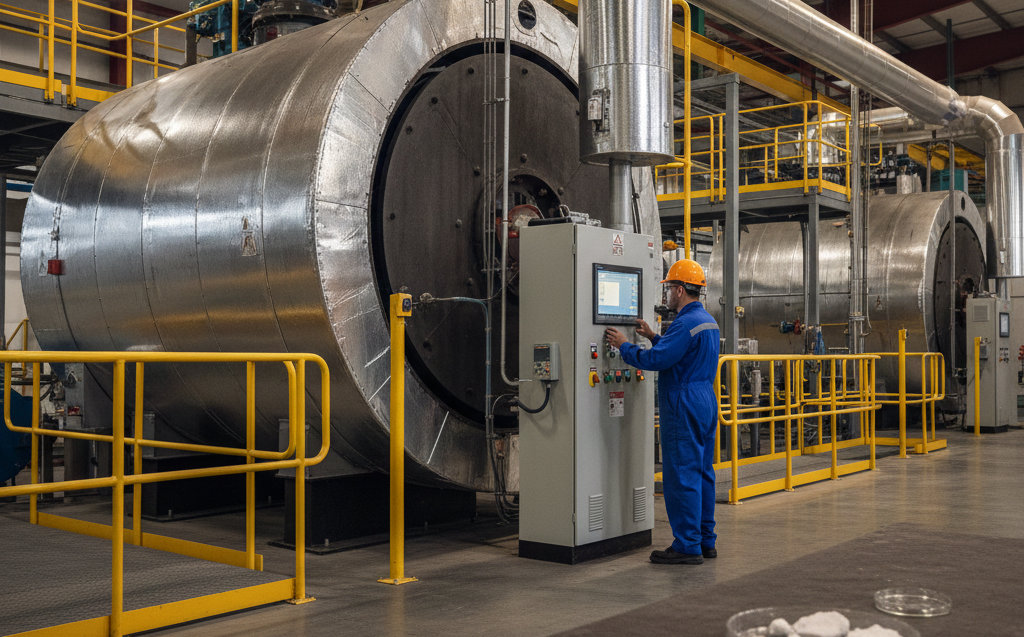
Boiler Scale Prevention for Manufacturers
DOE best practices for maintaining steam system efficiency—and why chemical-free scale prevention delivers up to 5% fuel savings.
Read Article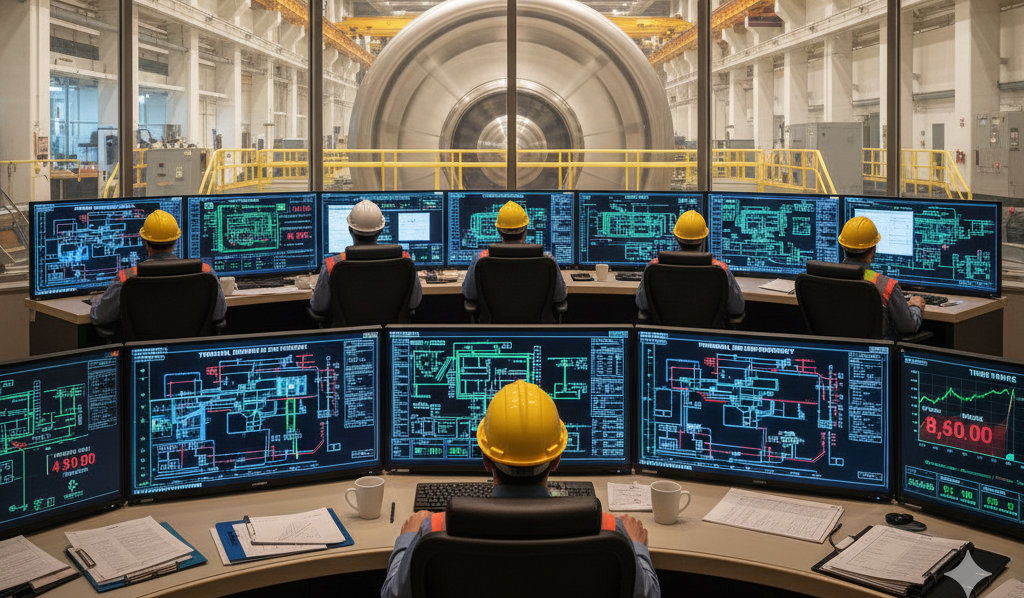
Heat Rate Improvement Guide
How scale prevention delivers 1.5-5% improvements without chemicals for power generators.
Read Article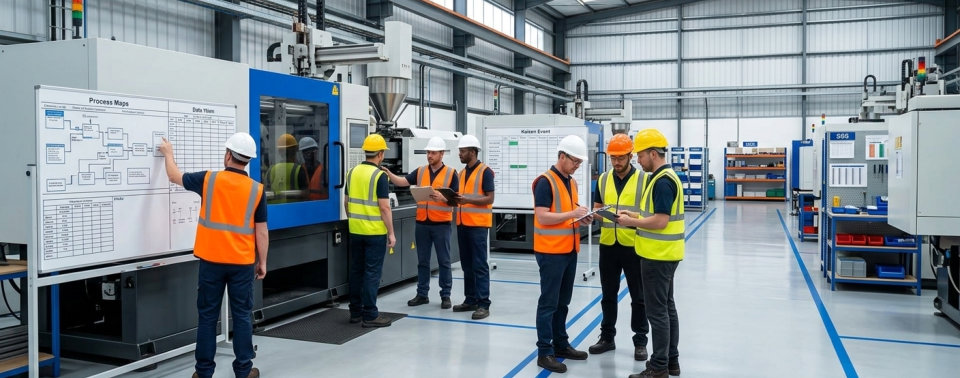
Lean Manufacturing & Water Efficiency
How scale control supports continuous improvement—eliminating the hidden waste that undermines kaizen and operational excellence.
Read ArticleRecommended Vulcan Models for Boilers
Vulcan S100 / S150
Up to 500,000 BTU
Package boilers
Commercial water heaters
Small industrial processes
View S100 DetailsVulcan S250 / S350
500,000 - 2,000,000 BTU
Multiple boiler plants
Central heating systems
Industrial processes
View S250 DetailsVulcan X-PRO Series
2,000,000+ BTU / multiple boilers
Power plant boilers
Large industrial complexes
District steam systems
View X-PRO DetailsReferences
- U.S. Department of Energy. (2013). Impacts of Water Quality on Residential Water Heating Equipment.
- Rinnai UK. Limescale Protection in Commercial Heating Systems.
- National Board of Boiler and Pressure Vessel Inspectors. Water Maintenance Essential to Prevent Boiler Scaling.
- Liju Thermal Equipment. Common Steam Boiler Failures: Causes, Remedies, and Preventive Measures.
- Institut Teknologi Sumatera. (2025). Analisis Pengaruh Scaling terhadap Efisiensi Termal Water Tube Boiler di PLTU 3×10 MW Unit 3 Tanjung Enim.
- Miura Boiler. Preventing Boiler Scale in Industrial Steam Systems.
- Integrated Global Services. Online Scale Removal on Fired Heater Improves Efficiency and Cuts Fuel Consumption.
- Heating Help. Avoiding Scale in Heating Systems.
- Chem-Aqua. Condensate Polisher Saves Hospital Thousands in Maintenance and Operational Costs.
- Centers for Disease Control and Prevention. Cooling Towers Module.
- Rinnai UK. Hotel Case Study on Scale Protection.
Protect Your Boilers
Join thousands of facilities worldwide eliminating scale-driven efficiency losses—without chemicals, without downtime, without compromise.
About the Author
Waslix (Vulcan Mineral Descaler) provides non-chemical, maintenance-free scale prevention for boilers worldwide. Our physical impulse technology keeps heat transfer surfaces clean, maintains design efficiency, and eliminates acid cleaning—trusted by industrial facilities, power plants, and commercial buildings globally. Create an account for detailed model specifications and pricing.


