
RO Membranes.
How does mineral scaling impact RO membranes?
The Scale Problem: 2.5 Million Search Results Can't Be Wrong
An online search for "how does mineral scaling impact RO membranes" will yield over 2.5 million results. The severity of mineral buildup in residential, commercial, and industrial Reverse Osmosis filtration membranes impacts every operational aspect of RO systems—shortening membrane lifespans, increasing maintenance requirements, decreasing solute rejection rates, blocking permeability pores, and compromising water quality [1][2].
203%
Longer membrane lifespan with pretreatment [3]
80%
Operating cost reduction [3]
$50K
Saved in 9 months [4]
One of the largest aluminum wheel manufacturers in China saved $50,000 over a 9-month period after installing the Vulcan descaling device to support their industrial RO membranes [4]. This is just one example of the substantial financial impact that scale prevention can deliver.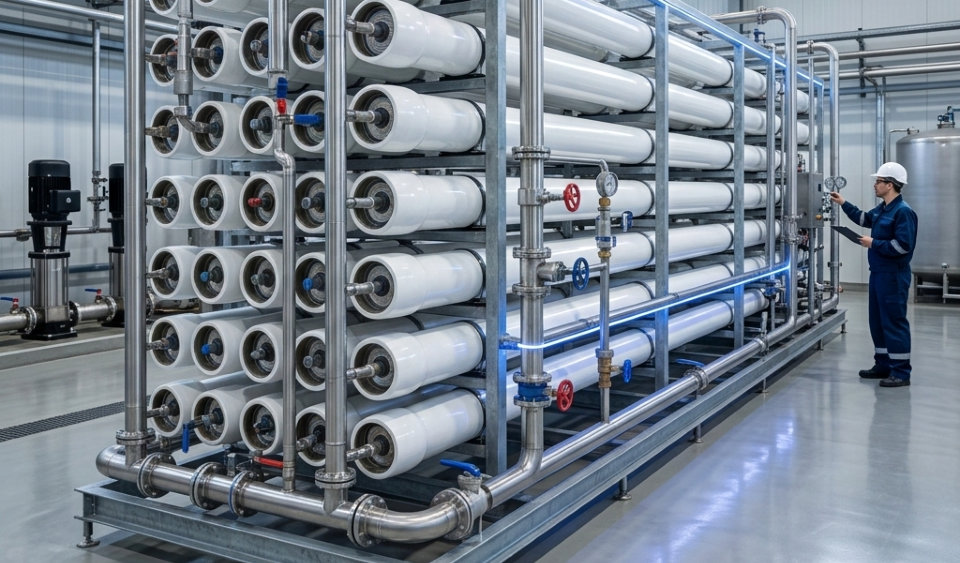
Research: Electrochemical Pretreatment Extends Membrane Life by 203%
A 2025 study published in the Chemical Engineering Journal demonstrated that electrochemical pretreatment can extend RO membrane lifespan by an astonishing 203% while reducing operating costs by 80% compared to conventional RO systems [3].
The research showed that pretreatment removed scaling ions (Ca²⁺, Mg²⁺) before they reached the membrane, degraded organic foulants through electrocatalytic oxidation, and inactivated microbes through electrochemical disinfection [3].
Membrane lifespan: 1352 minutes with pretreatment vs. 445 minutes without—a 203% increase [3].
Silica scaling represents one of the most challenging issues in industrial water systems due to its complex composition and difficulty in removal [5][6]. Unlike calcium carbonate scale, silica deposits resist conventional acid cleaning methods and often lead to permanent membrane replacement.
Researched Impacts:
- Membrane flux continuously decreases with operation time, even at low silicic acid concentrations [5]
- Scaling forces higher operating pressures, increasing energy consumption by 15% or more [7]
- Facilities spend thousands of dollars annually replacing and disposing of used membranes [2]
- Chemical cleaning can only restore 9-20% of membrane performance in full-scale systems [8]
- RO membranes with mineral scaling create an environment for bacteria to multiply [9]

Using Chemicals to Descale RO Membranes: Is That Really the Best Answer?
Mineral scale buildup in RO systems requires a steadily increasing pressure to maintain benchmark flow rates. Traditional approaches involve acid injection, water softening, or scale inhibitor injection—but these methods have significant limitations.
The Chemical Approach:
Restoring RO performance typically requires an acidic solution to clean the membrane pores. However, this cleaning approach will not work with all types of mineral scale, such as silica [5][6].
The Chemical Process
- System downtime during cleaning cycles
- Acid injection—ineffective against silica [5]
- Antiscalants require precise dosing and constant replenishment [2]
- Chemical discharge into environment
- Lab-scale cleaning (50% effective) vs. full-scale (9-20% effective) [8]
- If chemical cleaning fails, replacement becomes the only option
- EDTA and SDS cleaning can alter membrane surface characteristics [10]
The Vulcan Approach
- Zero downtime—continuous operation
- No chemicals, no acid, no antiscalants
- Effective against all scale types—including silica (client reference)
- Zero chemical discharge
- Permanent scale prevention
- Install once, protect forever
- $50,000 saved in 9 months by one client [4]
Research: Silica Scale Removal with Gallic Acid
A 2024 study in Chemosphere investigated silica scale cleaning using gallic acid (GA), a natural product found in plants. Results showed that GA could restore membrane flux to 89.7% of initial value by removing 81.87% of silica scale within just 30 minutes [5][6].
The cleaning mechanism involved GA adsorbing onto silica scale particles to form a surface complex, which then transitioned into a water-soluble 1:3 complex within the solution, facilitating gradual decomposition of the silica scales [5].
You Could Just Use the Vulcan Descaler
Zero Effort to Manage Mineral Scaling Concerns

Vulcan S100 — chemical-free scale prevention for RO membranes and entire water systems
Simple. Effective. Permanent.
Install over your pipe lines before your RO equipment and let science and nature take care of the entire descaling process.
Even after chemical descaling, as soon as 1mm of scale reforms, energy consumption increases by 7-12% [3].
The Vulcan descaler's proprietary technology continuously prevents scale formation—so your RO membranes always operate at design efficiency.
The Vulcan descaler continuously protects your:
Contact us for a holistic building-wide implementation plan:
Response within 24 hours
Install once, protect forever — zero maintenance, zero chemicals, zero ongoing costs.
Scale Is Part of a Much Larger Problem

Mineral scale issues on RO membrane surfaces are not only about maximizing equipment efficiency.
Waterborne pathogens use mineral scale buildup as a breeding ground and food source.
The Biological Reality:
RO systems block pathogens from entering your clean water pipelines. Bacteria require nutrients for survival—including carbon, hydrogen, oxygen, nitrogen, phosphorus, sulfur, sodium, iron, calcium, magnesium, and zinc. RO membranes with mineral scaling create a great environment for bacteria to multiply. It just takes one microscopic tear to flood your clean water with unwanted bacteria.
The Hidden Danger:
Scale creates the perfect environment for biofilm and pathogens to thrive—and biofilms formed in lab conditions differ significantly from those in full-scale systems [8].
Research: Biofilm Differences in Full-Scale vs. Lab-Scale RO Systems
A study published in the Journal of Membrane Science found significant differences between biofilms formed in laboratory conditions versus full-scale RO systems [8].
Lab-scale biofilms: Polysaccharide-rich EPS (Protein/Polysaccharide ratio = 0.5)
Full-scale biofilms: Protein-rich EPS (Protein/Polysaccharide ratio = 2.2)
EPS extracted from full-scale biofilms have a higher affinity and rigidity to the membrane surface compared to EPS from lab-scale biofilms. This explains why chemical cleaning protocols developed in the lab often fail in real-world applications—achieving only 9-20% flux recovery in full-scale systems compared to 50% in lab-scale [8].
The Scale-Biofilm Connection
- Rough scale surfaces trap organic matter, feeding bacteria
- Biofilm forms on scale, protecting pathogens
- Full-scale biofilms are protein-rich and adhere more strongly [8]
- Chemical cleaning achieves only 9-20% flux recovery [8]
Bacteria use calcium and magnesium for metabolic processes—the same minerals that form scale.
The Vulcan Solution
- Eliminates scale — removes biofilm habitat
- Smooth surfaces — pathogens have nowhere to hide
- Zero chemicals — no discharge, no hazards
- 40+ years proven — 70 countries worldwide
- Continuous protection — 24/7 scale prevention
- 203% longer membrane life — research-backed [3]
Technology developed over 40+ years across 70 countries
The Vulcan anti-scale solution continuously removes and prevents lime scale buildup — protecting both your equipment and the people who depend on it.
Scale control is biological control
Preventing scale means preventing the biofilm that protects pathogens. Read our comprehensive Legionella Prevention Guide →
Real Proof: What Our Clients Say
"We were very surprised at how well the Vulcan electronic mineral descaler worked to alleviate our scaling problems." — One of the largest aluminum wheel manufacturers in China saved $50,000 over a 9-month period after installing the Vulcan descaling device to support their industrial RO membranes [4].
"Maintenance intervals and costs have decreased. Membrane service life has been extended."
"Cooling tower fills: the silica (SiO2) which was usually accumulated in the fins has disappeared; the energy consumption of the air conditioning systems and the cleaning effort have been reduced."
Industry Advances in RO Membrane Technology
Electro-Active Membranes
Active Membranes has successfully scaled its spiral-wound RO element to the standard 8-inch by 40-inch size, enabling pilot and full-scale applications in desalination and water reuse [11][12].
The electro-active RO membrane applies a low electrical potential across its surface to dynamically prevent scaling and fouling—enabling chemical-free operation, higher recovery rates, and up to 50% reductions in overall desalination cost [11].
NanoStack Coated Membranes
WaterSurplus completed a multi-year pilot of its patented NanoStack coated membranes at the Orange County Water District's Groundwater Replenishment System. Results showed that NanoStack cuts clean-in-place requirements by more than half and reduces RO energy consumption by over 15% [7].
The coating is designed to enhance membrane durability, cleanability, and lifespan, supporting more reliable operation and lower lifecycle costs [7].
These advancements demonstrate the industry's focus on extending membrane life and reducing chemical usage. Vulcan's chemical-free scale prevention complements these technologies, providing an additional layer of protection against the most persistent operational challenge: mineral scale.
"Discarding residential, commercial, or expensive industrial RO membranes well before their end-of-use lifespan has a staggering impact on both financial costs and environmental waste. Vulcan anti-scale is a greentech solution to manage mineral scaling concerns."

"NYC Accelerator (decarbonize NYC by 2050, Local Law 97) has allowed this technology to be part of an implementation solution to help decarbonize New York City buildings due the significant impact that mineral scaling has on energy efficiencies."
Research & Studies

Centre for Environmental Chemistry
Download PDF
Impact of Water Hardness on Energy Consumption
Eskom Research Center found mineral scaling led to increased power consumption.
Read Study
Influence of Water Scale on Thermal Flow Losses
International Journal study: scale impacts energy efficiency by 10% to 60%.
Read Study
Impacts of Water Quality on Equipment Life
PNNL: Scale can decrease equipment life by more than half.
Read StudyRelated Articles & Resources
Boiler Scale Prevention for Manufacturers
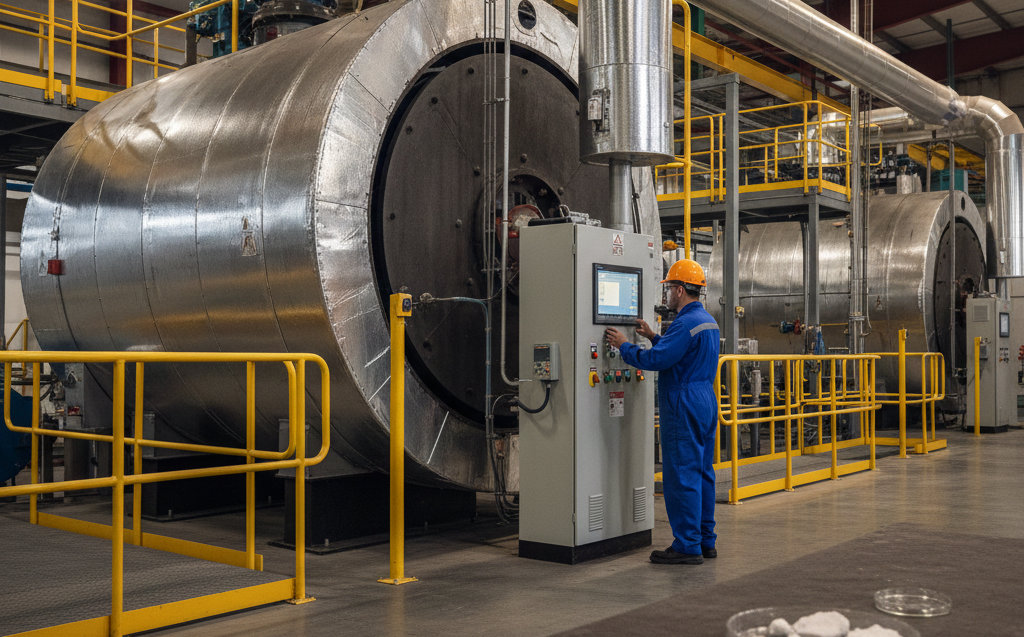
DOE best practices for maintaining steam system efficiency—and why chemical-free scale prevention delivers up to 5% fuel savings.
Read Article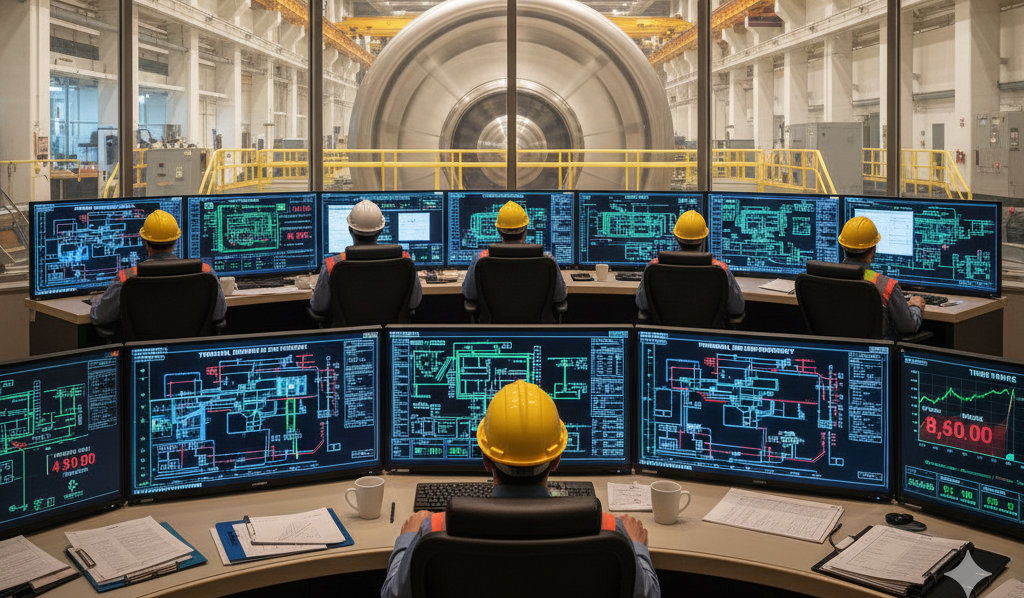
Heat Rate Improvement Guide
How scale prevention delivers 1.5-5% improvements without chemicals for power generators.
Read Article
Cooling Tower Water Chemistry Management
Balancing cycles of concentration, scale prevention, and environmental compliance.
Read ArticleRecommended Vulcan Models for RO Systems
Vulcan S50 / S100
Up to 4" pipe diameter
Single RO systems
Point-of-use applications
Light industrial use
View S100 DetailsVulcan S250 / S350
Up to 8" pipe diameter
Multiple RO trains
Industrial process water
Manufacturing facilities
View S250 DetailsVulcan X-PRO Series
Up to 40" pipe diameter
Large desalination plants
Municipal water treatment
Power generation facilities
View X-PRO DetailsReferences
- ScienceDirect. (2025). Scale-up of thin-film composite membranes: Interdisciplinary considerations for commercialization.
- Kurita America. (2024). Sustainable Membrane Treatment Solutions for Optimal System Performance.
- ScienceDirect. (2025). Electrochemical pretreatment enhances RO performance: Extending membrane lifespan while reducing concentrate volume.
- Huomei Wheel Manufacture Client Feedback.
- Chemosphere. (2024). Scaling and cleaning of silica scales on reverse osmosis membrane: Effective removal and degradation mechanisms utilizing gallic acid.
- OUCI. (2024). Scaling and cleaning of silica scales on reverse osmosis membrane.
- Filtration and Separation. (2026). WaterSurplus completes NanoStack membrane pilot in Orange County.
- KWR. (2020). A comparison between chemical cleaning efficiency in lab-scale and full-scale reverse osmosis membranes.
- Vulcan Descaler. Silica Removal Client Reference.
- KCI. (2024). Characteristics of SiO2 Scale Removal by Chemical Cleaning in Reverse Osmosis Membrane Process.
- fs-journal.de. (2025). Scale-up milestone for electro-active reverse osmosis technology.
- Water Online. (2025). Active Membranes Achieves Key Scale-Up Milestone With 8-Inch Electro-Active RO Element.
Protect Your RO Membranes
Join thousands of facilities worldwide eliminating scale-driven efficiency losses, extending membrane life, and reducing operating costs—without chemicals, without downtime, without compromise.
About the Author
Waslix (Vulcan Mineral Descaler) provides non-chemical, maintenance-free scale prevention for RO membranes worldwide. Our physical impulse technology keeps membrane surfaces clean, maintains design performance, and eliminates acid cleaning—trusted by industrial facilities, manufacturing plants, and commercial operations globally. Create an account for detailed model specifications and pricing.


